

How to Choose a Freezing Point Osmometer for Pharmaceutical Analysis
How to Choose a Freezing Point Osmometer for Pharmaceutical Analysis
A osmometer نقطة التجميد should be selected against the laboratory’s measurement task, not a generic promise of accuracy. Define the sample categories, expected osmolality range, sample amount, workload, timing and record-review process before comparing instruments.
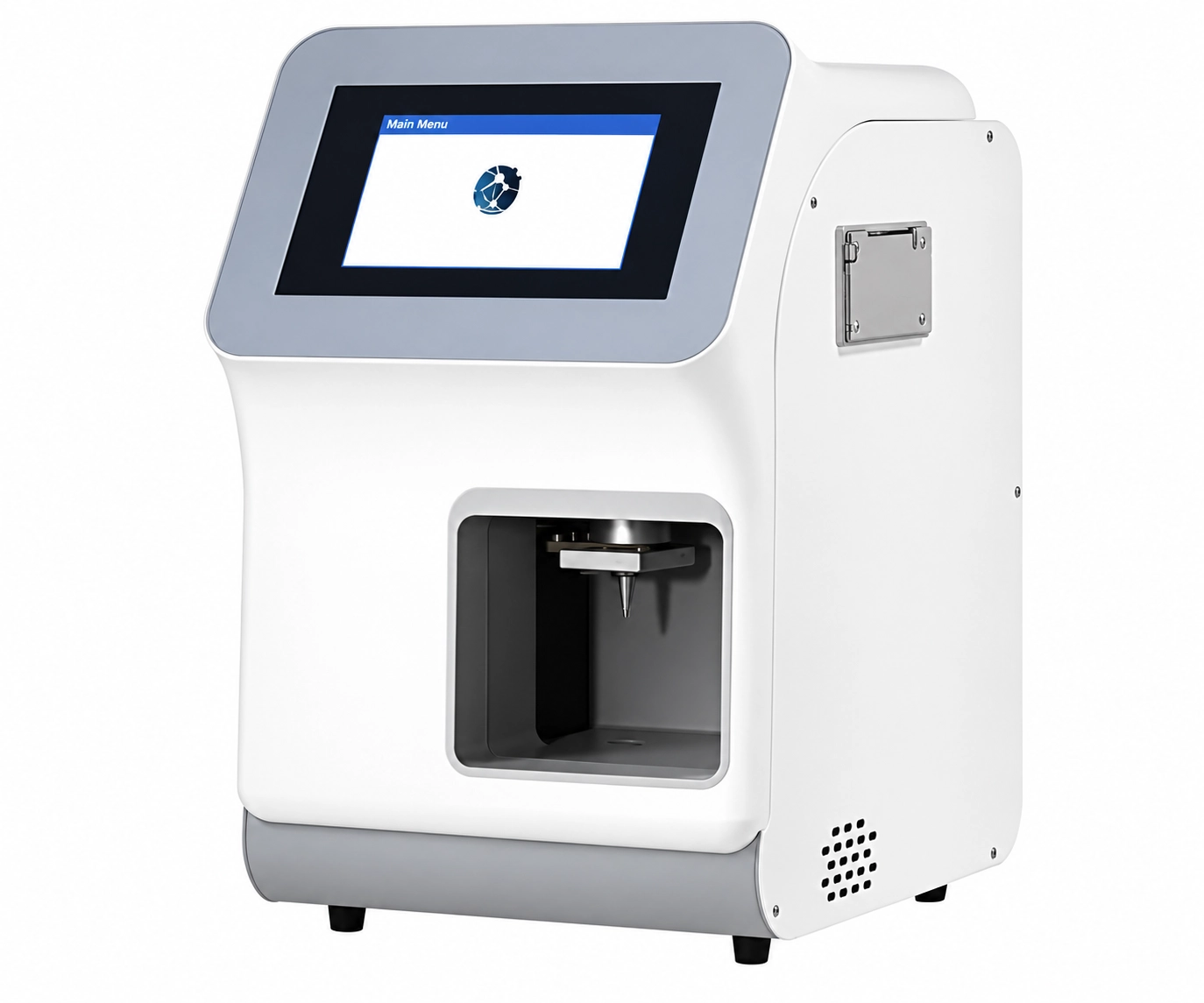
For pharmaceutical analysis, the buyer also needs to distinguish a method principle from a complete application approval. MedIntegrity’s FPOSM-V3.0 is a relevant model to evaluate because its official information identifies pharmaceutical analysis use and publishes concrete fields such as a 0-3000 mOsmol range, 100 µL sample amount, test and pre-cooling times, and electronic record functions.
This guide turns the search for a freezing point osmometer into a practical B2B selection and RFQ process. It explains which specifications answer different purchasing questions, how sample volume and cycle time affect routine work, and how to assess user controls and audit records.
What to Define Before Buying a Freezing Point Osmometer
Define the analytical decision
Begin with the result your laboratory must produce. List the sample categories, expected result band, normal and exceptional samples, repeat-testing rules and the decision that uses the result. A wide instrument range may look attractive, but it does not prove that every matrix, concentration or preparation is suitable. The supplier needs enough context to discuss sample fit under stated conditions.
Map the routine workload
Next quantify the work. Record samples per shift, peak batches, repeat measurements, startup pattern, cleaning, calibration-related activities and review time. Testing duration is only one part of the cycle. If a team compares a nominal test time with a full laboratory workflow, it may overestimate capacity or overlook the time needed for preparation and controlled review.
- Sample categories and properties that may affect preparation or measurement.
- Expected osmolality range with a practical operating margin.
- Routine and peak sample count, repeats and total review workload.
- Operator, reviewer, signer and administrator roles.
- Required records, audit review, export and retention expectations.
Separate Method and Performance Fields
Separate performance fields
An RFQ should keep measurement range, measurement error, repeatability, linearity and resolution in separate rows. Range describes the span the instrument is specified to cover. Error describes closeness to a reference under stated conditions. Repeatability describes agreement among repeated results, while linearity concerns response across the range. Resolution is the displayed increment, not proof of accuracy.
Keep method comparisons bounded
The method comparison also needs discipline. A vapor pressure vs freezing point osmometer discussion can help a buyer understand principles, but it should not replace a sample-specific fit assessment. Ask each supplier to state the offered principle, applicable conditions, reference materials or checks, and any sample limitations in the same format.
FPOSM-V3.0 is described as a freezing point osmometer based on freezing-point depression theory for pharmaceutical and pharmaceutical-analysis work. Its official parameters list a 0-3000 mOsmol measurement range, measurement error no more than 1%, repeatability no more than 1%, linearity no more than 1% and 0.1 resolution. Treat each number as a published model field to compare with your requirement under its stated conditions, not as a universal performance promise for every sample.
Sample Amount and Laboratory Workflow
Check sample consumption
Sample amount can change the practical value of an instrument when material is limited or repeat testing is frequent. FPOSM-V3.0 lists a 100 µL sample amount. That is a useful RFQ field because it lets the laboratory compare consumption and preparation assumptions across suppliers. It does not, by itself, confirm that every small-volume sample is suitable or that no conditioning step is required.

Build the full cycle time
Separate testing time from pre-cooling time. FPOSM-V3.0 lists testing duration of no more than three minutes and pre-cooling time of no more than three minutes. Build the complete cycle around the actual workflow: sample preparation, loading, measurement, repeat decisions, cleaning and record review. A short instrument time can still produce a long operational cycle if the surrounding steps are not controlled.
- Map the normal sample path from receipt or preparation to approved result.
- Record the required sample amount and whether repeats need additional material.
- Separate instrument measurement from pre-cooling, preparation, cleaning and review.
- Identify difficult or non-routine samples for written application confirmation.
- Use the same workflow assumptions in every supplier response.
Electronic Records and User Controls
Specify the user-control workflow
Data controls belong in the equipment requirement, but a feature name is not a complete data-integrity assessment. Map who can operate, review, sign, configure and administer the instrument. Define how results are retrieved, how audit entries are reviewed, how records are retained, and which site procedures govern changes. The instrument should be assessed as part of that controlled process.
Translate features into RFQ questions
FPOSM-V3.0 lists electronic signatures, user classification management and an audit trail with capacity stated as 300,000 sets. Those published functions can become concrete RFQ questions: which roles are available, what actions are attributed, how records are searched, and how the site exports or reviews them. The buyer still needs to confirm the complete workflow, interface, operating environment and any additional integration requirement before treating the feature set as suitable.
Keep unrelated equipment decisions separate. If your project also needs TOC measurement, use a separate TOC analyzer review rather than combining two analytical requirements into one osmometer page. Separate requirements make method, data and quotation comparisons clearer.
How FPOSM-V3.0 Fits a Requirement
Check the model against requirements
Use the FPOSM-V3.0 product page as a model-level confirmation list. Check the published range against the expected result band, the 100 µL sample amount against material availability, and the stated timing against the full workflow. Then review the resolution, error, repeatability and linearity fields separately. This is a disciplined shortlist exercise, not an automatic application approval.
| Requirement field | Buyer question | FPOSM-V3.0 published field |
| الطريقة | Which principle is required? | Freezing point depression method |
| Range | What result band must be covered? | 0-3000 mOsmol |
| كمية العينة | How much material is available? | 100 µL |
| Timing | What affects readiness and cycle time? | Testing and pre-cooling each no more than 3 minutes |
| Performance | Which values must be compared separately? | Error, repeatability, linearity and resolution are listed |
| Records | Which controls must be mapped? | Electronic signatures, user classification and audit trail |
The table is useful only when the buyer adds conditions. Use the freezing point osmometer category for product-family context, then ask for the applicable sample type, operating environment, preparation assumptions and any check or calibration procedure associated with the response. If those conditions are missing, mark the field open rather than treating a bare number as comparable evidence.
Freezing Point Osmometer RFQ Checklist
Build a controlled osmometer RFQ
A pharmaceutical osmometer supplier should receive a single, controlled requirement set. Start with the analytical purpose and sample categories, then add range, sample amount, workload, timing and performance. Include user roles, electronic signatures, audit-trail review, interface language, operating environment, data export and the documentation or support scope your organization expects. Do not assume that training, qualification or method support is included unless it is written into the quotation request.
- Measurement principle and intended pharmaceutical-analysis task.
- Sample categories, expected range and any difficult matrix or preparation condition.
- Sample amount, repeats, workload and complete cycle-time assumptions.
- Range, error, repeatability, linearity, resolution and applicable conditions.
- User roles, signatures, audit records, retrieval, export and retention.
- Interface language, operating environment, utilities and installation constraints.
- Configuration, documentation, training, qualification support and exclusions.
Limitations and Verification Steps
Keep sample fit conditional
Do not turn a freezing point osmometer specification into a promise for an unreviewed sample. Sample composition, viscosity, preparation and laboratory handling can affect method fit. Ask for written confirmation of the intended sample categories and conditions, and keep method suitability, instrument qualification, calibration controls and release decisions under the responsible quality and laboratory procedures.
Separate data features from compliance conclusions
The same caution applies to compliance language. Electronic signatures, user classification and audit-trail functions may support a controlled record workflow, but they do not independently establish compliance with every regulation or site procedure. Map the instrument functions to the organization’s requirements and document any gap before purchase.
الخاتمة
The best freezing point osmometer is the one that fits the sample, range and review workflow your laboratory actually operates. Separate method, range, performance, sample amount, timing and record-control questions before comparing suppliers.
FPOSM-V3.0 can be shortlisted when its published freezing-point method, 0-3000 mOsmol range, 100 µL sample amount, timing and record functions match the defined requirement. Those fields still need to be checked against the intended sample and controlled process.
Prepare the sample description, expected range, workload, role map, record requirements and open application questions, then use the MedIntegrity contact route to request a written configuration discussion. A precise RFQ creates a better basis for technical comparison than an isolated request for an osmometer price.
أسئلة متكررة
What range should a pharmaceutical freezing point osmometer cover?
The range should cover the expected result band with a practical margin, but range alone is not enough. Compare it with error, repeatability, linearity, resolution, sample conditions and the intended laboratory decision. For FPOSM-V3.0, the published range is 0-3000 mOsmol; the buyer should confirm how that range applies to the intended samples.
Is a 100 µL sample amount suitable for every laboratory sample?
Not automatically. A 100 µL published sample amount is a useful comparison field when material is limited, but sample preparation, viscosity, composition and repeat requirements still need review. Ask the supplier to confirm the intended sample categories and conditions rather than assuming that nominal volume proves method suitability.
How are resolution and measurement error different?
Resolution is the smallest displayed increment. Measurement error describes closeness to a reference under stated conditions. A finer display does not prove equivalent accuracy, so both should remain separate RFQ fields. The same separation applies to repeatability and linearity, which answer different performance questions.
What data controls should be included in an osmometer RFQ?
Include operator, reviewer, signer and administrator roles; electronic-signature behavior; user classification; audit-trail review and retrieval; record export and retention; interface language; and any site-specific integration requirement. Then ask the supplier to state what is included and under which conditions.

 Arabic
 English
 Russian
 Spanish
 Portuguese
 German
 French
 Italian
 Dutch
 Japanese
 Vietnamese
 Korean
 Malay
 Thai