

Mastering Membrane Filtration: The Science Behind Different Separation Methods
Mastering Membrane Filtration: The Science Behind Different Separation Methods
Membrane filtration plays a huge role in modern industries. It provides very accurate separation techniques for pharmaceuticals, water treatment, food processing, and scientific research. By using advanced materials with well-designed pore structures, membrane filtration systems can pull out particles, molecules, and contaminants with impressive accuracy. This article digs into the science of membrane filtration. We will look at PTFE filters. Also, we will compare them with PES filters and check out the important things that affect system design and choice.
Exploring the Fundamentals of Membrane Filtration
Membrane filtration is a very common separation process. It has changed things a lot. This process has totally reshaped work in both big factories and small labs.
Key Principles Behind Membrane-Based Separation
The basic principle of membrane filtration involves the selective permeability of the membranes, which passes the desired particles through a porous barrier based on size or chemical characteristics. It is pretty simple. In addition, variables like pore size, the membrane’s material, and the pressure you apply are very important for how well the separation works.
Membrane filters are made to give specific results in many different industries. For example, they are key for sterile filtration in the drug-making business. In water treatment, they make drinking water safe by getting rid of tiny germs and bad chemicals. Food processing also uses this technology. For instance, it is used to make juices stronger or to clear bacteria from milk products. Meanwhile, labs rely on it for getting samples ready and for many analytical tests.
Classification of Membrane Filtration Techniques
The different kinds of membrane filtration are grouped by the size of the particles they can catch:
- Microfiltration (MF): This is great for taking out big contaminants like bacteria. Microfiltration membranes usually have pore sizes from 0.1 to 10 microns.
- Ultrafiltration (UF): This is used to pull apart proteins and other large molecules from liquids; ultrafiltration membranes have pores between 0.01 and 0.1 microns.
- Nanofiltration (NF): With very small pores around 0.001 microns, these membranes can remove tiny organic bits and divalent ions.
- Reverse Osmosis (RO): This is the pickiest method. RO membranes block even monovalent ions and dissolved salts with pores smaller than 0.001 microns.
Each method is aimed at certain molecular sizes. The choice depends on how pure the final product needs to be for the job at hand.
The Role of PTFE Filters in Enhancing Separation Precision
Of the various types of membranes, the filters made of PTFE are incredibly tough and exhibit superior chemical resistance, being very strong; hence, they are outstanding from others.
Characteristics of PTFE Membranes
PTFE membranes have a few special qualities that make them great for tough situations:
PTFE is chemically inert and hydrophobic and stable at high temperature. This is really great. So, these features make it perfect for uses with harsh solvents, strong acids, or very hot processes. Its water-hating surface naturally pushes water away. This is helpful for gas filtration. What’s more, it helps avoid problems from water vapor. Besides, PTFE membranes keep their shape even with big changes in pressure and temperature.
Advantages of PTFE Filters in Critical Applications
PTFE membranes are particularly useful when purity and stability are the top priorities:
- Their strong chemical resistance means they can be used safely in corrosive places, which makes them absolutely necessary in pharmaceutical and chemical production.
- They have low extractables. This is important. This feature guarantees that no unwanted stuff gets into delicate samples, which is vital for chromatographic or spectroscopic work.
- Their water-repelling quality is perfect for filtering gases where any dampness could mess up the results or break equipment down the line.
Common Applications of PTFE Membranes Across Industries
PTFE filters are used in a lot of different high-stakes settings:
First of all, in pharmaceutical making, they help with air and gas sterilization, making sure that production zones stay free of contaminants.
Next, analytical chemistry labs use PTFE membranes for filtering solvents because their non-reactive nature stops samples from breaking down.
Lastly, in electronics making and battery systems, PTFE filters are often used for venting, where gas needs to be exchanged in a controlled way without letting moisture inside.
Comparing PTFE Filters with PES Filters for Laboratory Use
While PTFE filters are key for many jobs, PES (Polyethersulfone) membranes have their own benefits in other situations.
Material Differences Between PTFE and PES Membranes
A major difference is how they react to water:
PTFE membranes are naturally water-repelling, which makes them fantastic for filtering organic solvents or gases.
On the other hand, PES membranes are water-loving. This means they soak up water easily. So, they allow for faster flow when you’re working with water-based solutions.
This basic difference is a big factor in choosing one over the other, depending on your sample and how you need to work.
Performance Considerations Based on Application Type
Picking between PTFE and PES means you have to understand what you are filtering:
When to Choose PTFE Filters:
You should use PTFE filters when you’re working with:
- Organic solvents like acetone or hexane
- Very strong acids or bases
- Gas filtration setups where you must keep water out
When to Choose PES Filters:
You should pick PES filters when you are dealing with:
- Water-based samples like buffers or protein solutions
- Biological fluids in medical or clinical tests
- Their water-loving nature helps get the job done quickly without losing any filtering power.
Factors Influencing Filter Selection in Membrane Filtration Systems
Picking the right membrane filter is about more than just the material. It has to work with your sample and your operating setup.
Compatibility with Sample Type and Chemical Composition
The filter material must not break down from chemicals. For instance, using a PES filter with a strong solvent could wreck the membrane or spoil your sample. It is a bad idea. Thus, it is super important to match the filter’s material with its chemical resistance.
Pore Size Selection Based on Target Particle Size
Pore size is the main factor in getting the separation you want. For sterilizing filtration of both liquids and gases, 0.2 μm membranes are the standard for getting rid of microbes. For just general particle cleaning in lab solutions, a 0.45 μm pore size might be good enough.
Flow Rate Requirements and Pressure Tolerance
Jobs that need fast filtering require membranes with low resistance and high physical strength. They must be tough. For example, PES might give you better flow rates with low pressure for watery samples, while PTFE can handle higher pressures in solvent-based systems without losing its shape.
Innovations Driving the Future of Membrane Filtration Technology
Membrane technology is always getting better. This progress is leading to smarter and more earth-friendly systems.
Advancements in Nanostructured Membranes
Scientists are now making membranes on a nanoscale to get better selectivity and flow. This is very new. These nanostructured designs give them exact control over how molecules are sifted.
Integration with Smart Sensing Systems
The next wave of filtration units will have sensors built right in. They will be able to watch performance in real-time. What’s more, these sensors can track pressure drops, flow rates, and possible membrane clogs before they cause a problem.
Sustainable Materials for Eco-Friendly Filtration
There is a bigger focus now on making membrane materials. These materials are biodegradable or recyclable. This helps lessen the impact on the environment. It does so without losing performance. These new ideas help labs be more sustainable. They still allow top-quality work.
MedIntegrity: A Trusted Partner in Laboratory Filtration Solutions
Getting good and dependable membrane filtration requires high-quality filters and the right equipment. For anyone looking for reliable solutions, specialized suppliers like ميدإنتجريتي provide full support.
Comprehensive Product Portfolio for Quality Control Needs
MedIntegrity’s product offerings are all about filtration and testing, helping with a lot of different quality control tasks. Key products directly related to membrane filtration are:
- Syringe and Membrane Filters: Featuring both PTFE and PES membranes for analytical and laboratory applications.
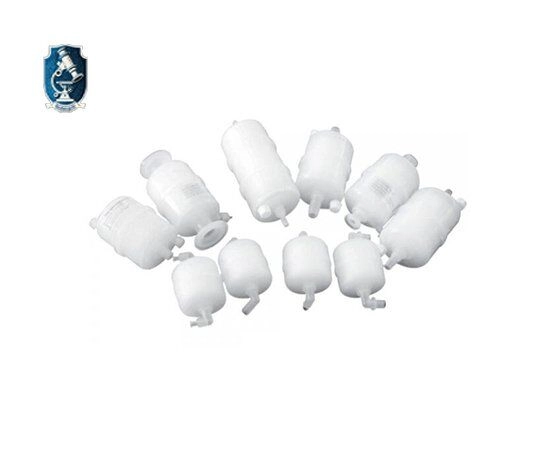
- مرشحات الكبسولة: Ready-to-use filtration devices for sterile venting and process-scale fluid handling.
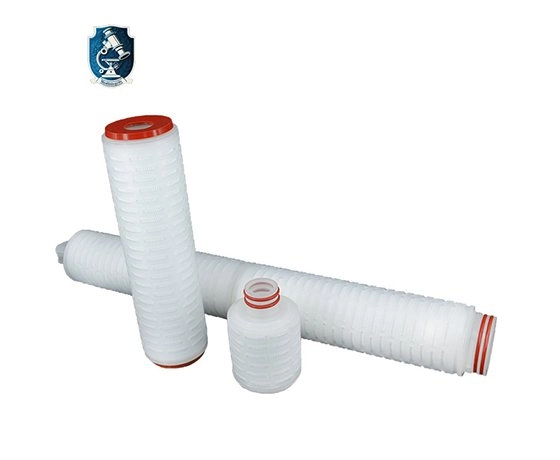
- Cartridge Filters and Filter Housings: High-performance pleated cartridges for industrial-scale applications.
- Filter Integrity Testers: Instruments essential for verifying the integrity of sterilizing-grade filters before and after use.
Commitment to Precision, Reliability, and Customer Support
As a partner that adds value, MedIntegrity gives customers many solutions for testing, analyzing problems, and lab research. The company makes sure all tools and supplies meet FDA and GMP rules, as well as USP and EP standards. This shows a real dedication to following regulations and helping customers succeed.
FAQs:
Q1: What makes PTFE filters suitable for solvent filtration?
A1: PTFE filters are chemically non-reactive and hold up against most solvents. This makes them perfect for filtering harsh chemicals without damaging the membrane or dirtying the samples.
Q2: Can I use PES filters for gas filtration applications?
A2: No, not really. PES filters are water-loving and are made mainly for water-based solutions. They are not a good fit for gas filtration, where you really need a water-repelling membrane like PTFE.
Q3: How do I determine the right pore size for my application?
A3: The right pore size really depends on the size of the particle you want to catch. You have choices. Common ones include 0.2 μm for sterilizing and 0.45 μm for general particle removal in liquids. Always make sure your filter’s pore size fits your process needs to get the best results.

 Arabic
  English
  Russian
  Spanish
  Portuguese
  German
  French
  Italian
  Dutch
Dutch  Japanese
  Vietnamese
  Korean
  Malay
Malay  Thai
Thai