
How Do TOC Analyzers Prevent Contamination in Pharmaceutical Production?
How Do TOC Analyzers Prevent Contamination in Pharmaceutical Production?
In pharmaceutical production, keeping products pure is not just a goal—it is a legal requirement. The existence of even tiny amounts of contaminants can harm a drug’s safety, effectiveness, and ability to meet worldwide health standards. One of the most helpful tools for making sure things are clean in these production settings is the Total Organic Carbon (TOC) analyzer. These are very important instruments. They are used for finding organic impurities in water systems and for checking cleaning processes. This article looks at how TOC analyzers stop contamination in drug production. We will also see why they have become completely necessary in today’s cleanroom operations.
The Importance of Contamination Control in Pharmaceutical Manufacturing
Contamination control is a basic part of quality assurance in the drug industry. It makes sure that products are safe for people to use and meet very strict official rules.
Key Sources of Contamination in Cleanroom Environments
Cleanrooms are made to limit particles in the air, but contamination can still come from different places. These sources include people, the surfaces of equipment, cleaning supplies, and water systems. Water used in making medicine—especially Purified Water (PW) and Water for Injection (WFI)—is very open to organic contamination. This is because of microbial growth or leftover cleaning agents.
Regulatory Standards for Water and Equipment Cleanliness
The testing methods must follow the rules of FDA and GMP regulations. Besides, they also have to meet the requirements of USP and EP. These guides set firm limits on the amount of contaminants allowed in water and demand proven cleaning methods for equipment used in making drugs.
Impact of Contaminants on Product Safety and Efficacy
Organic impurities can change a drug’s chemical makeup, shorten its shelf life, or cause bad reactions in patients. It’s a big problem. In sterile products, even a very small amount of contamination can lead to serious health dangers or the need to recall a product.
What is a Total Organic Carbon (TOC) Analyzer?
TOC analyzers are very accurate instruments. People use them to measure the amount of organic carbon in water samples. This measurement is a sign of the total organic contamination.
Definition and Basic Principles of TOC Analysis
TOC analysis works by oxidizing organic compounds, which turns them into carbon dioxide (CO₂). This CO₂ is then measured to figure out the total amount of organic material. So that, this process gives a full picture of all contaminants, both the ones we know about and the ones we don’t.
Types of TOC Analyzers Used in the Pharmaceutical Industry
Facilities might use either offline or online TOC analyzers, depending on what they need for their work.
Offline TOC Analyzers
For offline systems, a person has to collect samples by hand and take them to a lab station for analysis. They are accurate, but they can slow down reaction times when things are critical during production.
Online TOC Analyzers
Online analyzers check the water in real time, right inside the water system or cleaning check loop. This allows for quick detection and immediate action, all without stopping the work.
How TOC Analyzers Detect Organic Contaminants
The success of TOC analyzers comes from their sophisticated detection systems, which are designed for very pure settings.
Catalytic Oxidation and Conductivity Detection Methods
Most TOC analyzers used in the drug industry use catalytic oxidation at high temperatures. This process changes organics into CO₂. The CO₂ that is created changes the conductivity of the sample water. This change is measured very carefully to figure out the TOC levels.
Measuring TOC in Purified Water and Water for Injection (WFI)
TOC analyzers are a key part of watching PW and WFI systems all the time. Any change from the normal values points to a possible contamination that needs to be fixed right away.
Monitoring Cleaning Validation Processes
When checking equipment cleaning, leftovers from past batches have to be completely removed. TOC analyzers confirm that no organic material is left on surfaces. They do this by testing samples of the rinse water after cleaning.
Role of TOC Analyzers in Preventing Cross-Contamination
Cross-contamination between different drug products can lead to terrible outcomes. TOC analyzers are a big help in reducing these dangers.
Real-Time Monitoring During Production Processes
Online TOC systems allow for constant watch during manufacturing. This makes sure that any problem with the system’s integrity or any sudden contamination is found instantly.
Ensuring Equipment and System Cleanliness Post-Cleaning
Operators can confirm that everything has been removed before a new batch starts. First of all, they analyze the final rinse waters after CIP (Clean-in-Place) or manual cleaning.
Early Detection to Minimize Downtime and Product Loss
Real-time warnings allow people to step in immediately. This happens before dirty materials get further down the line, thus reducing waste, preventing recalls, and keeping up productivity.
Integration of TOC Analyzers into Pharmaceutical Quality Control Systems
Today’s quality management systems need a smooth connection between instruments and compliance rules.
Compatibility with FDA, GMP, USP, and EP Requirements
The testing methods are made to satisfy the demands of FDA, GMP, USP, and EP regulations. This ensures that the information from TOC analyzers can be used for official audits without needing extra validation work.
Data Logging, Audit Trails, and Compliance Features
Newer models have secure data storage. They come with audit trails that follow 21 CFR Part 11, which is very important for keeping electronic records under FDA rules.
Automated Alerts and Alarms for Rapid Response
Built-in alarms let operators know when the numbers go above the set limits. This allows for quick fixes before small issues turn into big problems.
Advantages of Using TOC Analyzers Over Traditional Methods
Old microbiological tests are still useful, but they are often not fast or sensitive enough for what the modern drug industry needs.
Speed and Accuracy of Results
TOC analysis gives results in just a few minutes. In contrast, culture-based methods can take hours or days. This allows for quicker choices during production.
Reduced Human Error and Manual Sampling Risks
Online systems get rid of mistakes from manual sampling because they automate both the collection and the testing. What’s more, this improves dependability across different shifts or work sites.
Cost Efficiency Over Long-Term Use
The first cost might be more than for simpler test kits. However, the savings over time are significant. These savings come from less downtime, fewer rejected batches, lower labor expenses, and better compliance.
Given the vital role of TOC analyzers in making sure pharmaceutical products are pure and compliant, picking the right instrument and partner is very important. A good supplier doesn’t just give you high-quality equipment. They also offer the knowledge and help needed to add these systems into a proven quality control plan without any trouble.
MedIntegrity: Your Partner in Pharmaceutical Contamination Control
Based in the U.S.A., Integridad médica focuses on precision testing instruments and supplies for the pharmaceutical business. We are proud to be a value-added partner. We give our clients complete solutions for process testing, problem-solving, and lab research.
Highlighted Products: TA-1.0, TA-3.0, TA-200 Series
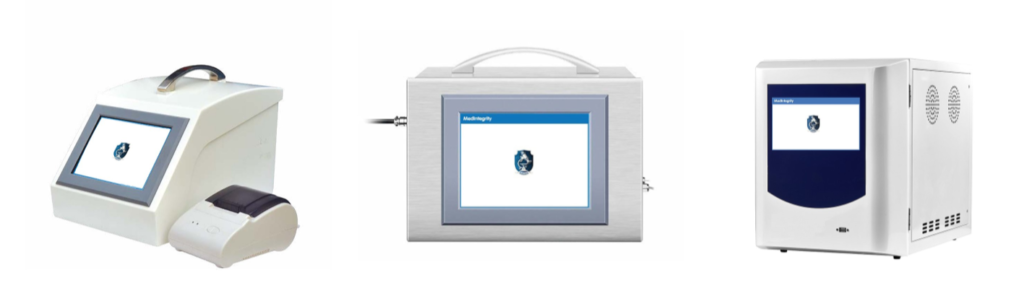
Our main Total Organic Carbon Analyzer products include the small Ta-1.0, the fast TA-3.0, and the advanced, automation-friendly TA-200 series. Top pharmaceutical companies around the world trust these systems. Some of our clients include SUN GARDEN VIETNAM CO., LTD., Elrazy Pharmaceuticals Co. (Egypt), and Mais Co. for Medical Products (Saudi Arabia).
Features Supporting Pharmaceutical Applications
Each model uses high-temperature catalytic oxidation and very sensitive conductivity detection. This makes it perfect for checking WFI systems and for cleaning validations that fully follow GMP rules.
Customization Options for Specific Client Needs
We know that every facility has special needs. For this reason, our systems can be adjusted for certain flow rates and setup needs, making sure they are just right for the job. Beyond TOC analyzers, we also offer other important instruments like Filter Integrity Testers.
Commitment to Innovation, Quality, and Customer Service
MedIntegrity has a strong dedication to new ideas and quality. We are actively involved in writing and creating industry standards, which shows our technical leadership. Our dedication also includes full customer support. This support provides complete technical help, training on how to use the instruments, and expert advice on calibration.
Preguntas frecuentes
Q1: What makes a Total Organic Carbon Analyzer essential for pharmaceutical manufacturing?
A: A TOC analyzer makes sure that purified water systems stay free from organic contaminants. These contaminants could harm drug safety or break official rules like FDA or USP guidelines. It provides a quick check during cleaning validations and also offers continuous monitoring during production.
Q2: Can TOC analyzers detect all types of contamination?
A: They are very good at finding organic carbon-based impurities, including microbial leftovers. However, they do not find inorganic contaminants like heavy metals or salts. Thus, they should be used with other analytical tools as part of a complete quality control plan.
Q3: Are MedIntegrity’s TOC analyzers compliant with international regulations?
A: Yes. MedIntegrity’s analyzers are built to meet the tough requirements of the FDA, GMP, USP, and EP. In addition, they support electronic record-keeping features that are compliant with 21 CFR Part 11. This makes them perfect for regulated settings all over the world.
 Spanish
  English
  Russian
  Portuguese
  German
  French
  Italian
  Arabic
  Dutch
Dutch  Japanese
  Vietnamese
  Korean
  Malay
Malay  Thai
Thai