

Pharmaceutical Packaging Leak Tester for Lyophilized Vial CCI Testing
Pharmaceutical Packaging Leak Tester for Lyophilized Vial CCI Testing
A lyophilized vial can look sealed and still carry package risk. The stopper may sit correctly, the crimp may pass inspection, and the cake may appear normal. Months later, stability data may show moisture drift, cake shrinkage, slower reconstitution, or an unexpected assay shift.
For freeze-dried sterile drug products, container closure integrity is not just a packaging detail. It is part of product protection. A pharmaceutical ほうそうもれしけんき helps manufacturers check whether the vial, stopper, and seal can maintain a reliable barrier before a small defect turns into a stability investigation.
メドインテグリティ focuses on integrity testing equipment for pharmaceutical manufacturing. In container closure integrity testing for lyophilized vials, the key need is controlled CCI testing, repeatable leak detection, suitable chamber design, and GMP-ready test records.
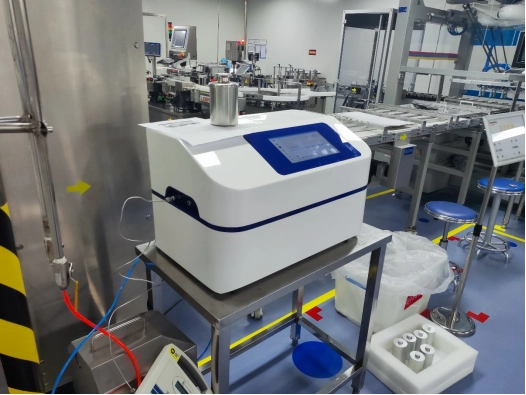
Why Lyophilized Vials Need Targeted CCI Testing
Lyophilized products are often used for formulations that do not tolerate moisture well. The dry cake depends on a stable internal vial environment. Once moisture or gas enters through a weak closure, product quality may change slowly rather than fail immediately.
A visible defect is easy to reject. A microleak near the stopper land, crimp area, or glass finish is harder to catch. It may pass ordinary checks and only become clear after storage, shipping, or stability exposure.
Moisture Ingress as an Early Risk Signal
Moisture ingress is one of the most practical warning signs in lyophilized vial quality control. It can affect both product appearance and analytical results.
Common signs may include:
- Higher residual moisture values
- Changes in lyophilized cake shape or texture
- Slower or inconsistent reconstitution
- Vacuum loss in vial headspace
- Oxygen-sensitive degradation
- Lot-to-lot stability variation
These failures are costly because they appear late. A package issue found during development can be handled through closure review, crimp adjustment, or method change. A package issue found during long-term stability may reopen batch records and delay quality decisions.
Closure Risks After Lyophilization
The lyophilization process can place stress on the container closure system. Stoppering position, chamber conditions, stopper compression, and post-cycle crimping all matter. Small differences in vial neck finish or rubber stopper behavior may also affect sealing performance.
In production, the source of risk is often ordinary:
- Crimp setting drift after changeover
- Stopper compression variation
- Vial format changes during scale-up
- Transport stress on weak seals
- Moisture change before visual failure
This is why CCI testing should be built around the actual package, not only around a generic leak test method.
How Vacuum Decay Supports Pharmaceutical Vial Leak Testing
Vacuum decay is widely used for rigid pharmaceutical containers because it provides a measurable physical response. The vial is placed inside a sealed test chamber. A vacuum is applied, and the system monitors pressure behavior. If gas moves through a leak path, the pressure pattern changes.
For regulated packaging programs, USP <1207> supports the broader container closure integrity testing framework, while ASTM F2338 is commonly associated with non-destructive vacuum decay leak testing for sealed packages.
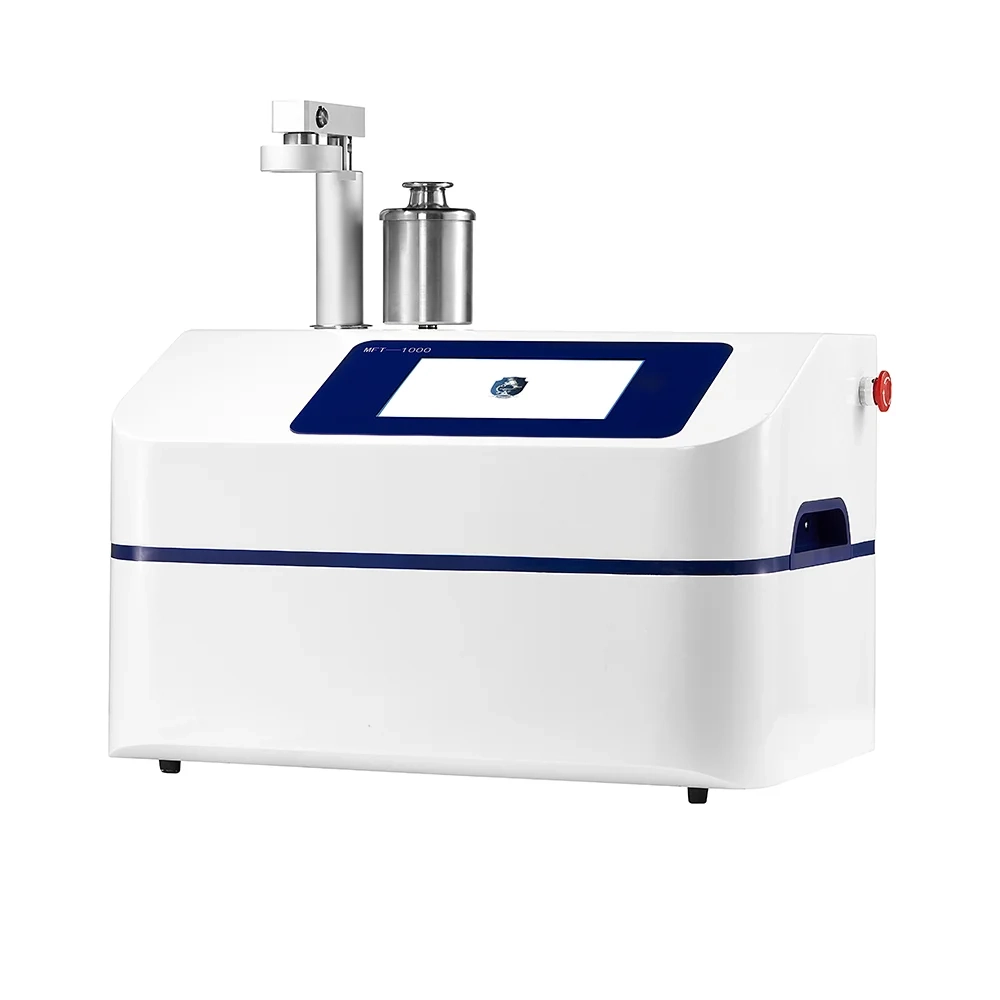
For lyophilized vials, MFT-600 vacuum decay testing is useful because it can be non-destructive when properly developed. That matters for small validation batches, high-value sterile products, and stability samples where every unit has value.
Why Vacuum Decay Fits Rigid Glass Vials
Rigid glass vials usually respond well to pressure-differential testing. The container does not collapse like a flexible package, so the pressure change in the chamber can be linked more clearly to leakage behavior.
A good vacuum decay method can help detect defects that may not be visible, including small leak paths around:
- Stopper-vial interfaces
- Crimped seal areas
- Glass finish defects
- Microcracks near the vial neck
- Closure damage after handling or transport
The method still needs development. Vacuum level, stabilization time, chamber volume, and acceptance criteria should be set for the specific vial and closure system. A copied method from another format may look convenient, but it can create weak data.
MFT-1000 pressure attenuation testing can also support facilities testing multiple sterile packaging formats, although vacuum decay remains the stronger focus for rigid lyophilized glass vials.
Method Development for Lyophilized Vial CCI Testing
Reliable CCI testing starts before routine testing begins. The instrument may be capable, but the method decides whether the result is useful.
For lyophilized vial leak testing, method development should account for:
- Vial size and headspace volume
- Stopper design and compression behavior
- Crimp quality and sealing force
- Chamber volume and fixture fit
- Vacuum or pressure setpoint
- Test stabilization time
- Known defect or leak reference checks
- False reject risk
- Sampling plan and batch purpose
A method that is too sensitive in the wrong way may create noise and unnecessary rejects. A method that is too loose may miss package risks that matter to stability. The goal is not the most aggressive setting on the screen. The goal is a method that reflects the real defect risk of the product-package system.
A validated method should be challenged under defined sample conditions, not assumed valid because the instrument can detect a standard leak. This point is easy to skip during early trials, but it often becomes important during method transfer or GMP review.
Chamber Fit, Headspace, and Stopper Geometry
Chamber design is one of the most overlooked details in CCI testing. A chamber that is too large, poorly matched, or difficult to load can reduce test stability. It can also make operators lose confidence in the result.
Lyophilized vial formats vary widely. A 2 mL vial, a 10 mL vial, and a larger specialty vial do not behave the same way in a test cavity. Stopper shape, headspace, neck finish, and crimp style can all influence test behavior.
A matched chamber helps reduce dead volume around the sample and supports more consistent pressure response. For manufacturers working with several vial sizes or custom closure systems, chamber customization is often part of a serious package integrity testing program.
Defect Standards and Sensitivity Checks
A practical method should be challenged with suitable defect standards or leak references when applicable. This step helps confirm whether the method can detect the type of failure the site is trying to control.
The useful question is not “Can the tester find a leak?” The useful question is narrower: “Can this test method detect a leak path that could affect this lyophilized product during storage?”
That distinction keeps the work focused on product risk instead of instrument capability alone.
Where CCI Testing Fits in GMP Workflows
For lyophilized vial products, leak testing can support several points in the product lifecycle. It does not need to sit only at the end of production.
| Workflow Point | Practical Risk | CCI Testing Value |
| Package development | Vial and stopper mismatch | Compare closure combinations before scale-up |
| Lyophilization validation | Stoppering and cycle-related stress | Check integrity after process exposure |
| Crimping setup | Seal force or cap variation | Detect weak sealing conditions |
| Stability planning | Moisture or gas ingress | Support long-term package confidence |
| Packaging change control | New vial, stopper, or cap supplier | Confirm closure performance after change |
| Small-batch production | Limited sample availability | Reduce waste through non-destructive leak detection |
This workflow view is useful for CDMOs and pharmaceutical manufacturers handling multiple vial formats. A test method that works for one vial size may not transfer cleanly to another. The best time to find that out is before the stability chamber is already full.
What Buyers Should Check Before Selecting a Leak Tester
Buying a leak testing system is really a method decision. The instrument, chamber, records, and validation path all need to fit the product.
Buyers should check:
- Method fit for rigid glass vials and target leak risks
- Chamber design for vial size, stopper shape, and headspace
- Repeatable results across operators and batches
- Electronic records, audit trail, and user access control
- Support for defect checks and method validation
- Non-destructive testing capability for limited samples
- GMP usability in routine quality workflows
In practice, many problems show up after method transfer, not during the first demo run. A test system that gives unstable results, poor chamber fit, or weak documentation can create extra work for quality teams, even when the instrument itself is technically capable.
How MedIntegrity Supports Pharmaceutical CCI Testing
MedIntegrity’s packaging leak tester category supports pharmaceutical sealing integrity testing across vials, ampoules, cartridges, prefilled syringes, BFS, and FFS. For lyophilized vial work, the most relevant capabilities include vacuum or pressure attenuation testing, non-destructive evaluation, database-supported records, customized chambers, and GMP-oriented review needs.
MedIntegrity’s wider background in pharmaceutical integrity testing also matters. Many sterile drug manufacturers already manage barrier control through filter integrity testing, package integrity checks, and GMP documentation. Bringing vial CCI testing into the same quality mindset helps create a stronger control strategy across filtration, filling, sealing, and stability programs.
For lyophilized vial projects, MedIntegrity can help teams match the leak test method to vial size, stopper design, chamber volume, and validation goals. That is more useful than choosing equipment by model name alone.
結論
Lyophilized vial CCI testing is not just about finding a leaking package. It is about protecting a moisture-sensitive sterile drug product before package weakness becomes a stability problem. A pharmaceutical packaging leak tester gives QA, packaging, and validation teams a measurable way to evaluate closure performance, compare vial formats, and support GMP records.
The strongest programs start with the package: vial size, stopper behavior, crimp quality, headspace, chamber design, and target defect risk. Vacuum decay and pressure attenuation can both support this work when the method is properly developed and verified.
For teams evaluating lyophilized vial package integrity, MedIntegrityへの問い合わせ to review the sample format, testing target, and validation needs to help select a practical leak testing setup.
FAQ
Q1: Why do lyophilized vials need CCI testing?
A: Small leaks can allow moisture or oxygen ingress, affecting cake quality, sterility protection, and stability data.
Q2: Is vacuum decay suitable for lyophilized vial leak testing?
A: Yes. Vacuum decay suits many rigid glass vials and provides quantitative, non-destructive leak detection when properly validated.
Q3: When is a customized chamber needed?
A: A custom chamber helps when vial size, stopper shape, headspace, or sensitivity targets differ from standard fixtures.
Q4: Can CCI testing replace sterility testing for release?
A: No. It supports closure integrity evaluation but does not prove initial product sterility for release.
Q5: What should buyers check before choosing a packaging leak tester?
A: Check method fit, chamber design, sensitivity, data records, audit trail, validation support, and GMP usability.
 Japanese
  English
  Russian
  Spanish
  Portuguese
  German
  French
  Italian
  Arabic
  Dutch
Dutch  Vietnamese
  Korean
  Malay
Malay  Thai
Thai