

How Integrity Testers Enhance Defect Detection in Pharma Packaging
How Integrity Testers Enhance Defect Detection in Pharma Packaging
 Integrity testers are vital tools in pharmaceutical packaging quality control. They boost defect detection by employing modern non-destructive techniques like vacuum decay and HVLD. These methods spot tiny leaks and seal problems that could harm product sterility and safety. Such testers help meet rules like USP <1207>. They also raise production speed via automated, consistent checks. Plus, they offer strong data for validation. In the end, they protect patient health by stopping tainted or weakened products from hitting the market.
Role of Integrity Testers in Pharmaceutical Packaging
In the pharmaceutical field, making sure every product arrives at the patient in its planned sterile and strong state is key. This goal stands out clearly when you look at container closure integrity (CCI). Integrity testers act as crucial devices. They find possible packaging flaws that might hurt the sterility, stability, or effectiveness of drug items.
Importance of Package Integrity in the Pharmaceutical Industry
Package integrity is basic to keeping the healing power of drug products. A faulty container can cause contamination, breakdown, and even harm to patients.
It guarantees product sterility and patient safety over the entire product life.
It upholds rule following with standards like USP <1207>, FDA, and EMA rules.
It stops contamination, leaks, and breakdown from outside factors.
Pharmaceutical packaging integrity testing is more than just a quality check. It is a must for rules. The FDA and EMA demand tough reviews during the product’s shelf life under ICH stability setups. This ensures steady work in different storage and shipping situations.
Common Defects in Pharmaceutical Packaging
Even with top manufacturing setups, packaging flaws can happen from material issues or process slips.
These usual problems include:
Tiny leaks and pinholes that you cannot see but let in contaminants.
Seal breakdowns from wrong heat sealing or mismatched materials.
Cracks or breaks in glass vials or ampoules during travel or storage.
Each problem can badly affect drug safety. For example, a tiny leak in a prefilled syringe might let oxygen in. This could weaken an oxygen-sensitive biologic mix.
Types of Integrity Testing Methods
Different testing ways are used to find packaging flaws. Picking between non-destructive and destructive tests relies on things like product kind, risk level, and output needs.
Non-Destructive Testing Techniques
Non-destructive ways let you check packaging strength without changing or harming the sample. This makes them great for pricey or small-batch items.
진공 붕괴 방법
Vacuum decay is a sure method. It checks pressure shifts in a closed space. If a leak exists in the package, gas slips into the space. This leads to a clear pressure rise.
This way gives high sensitivity. It also fits USP <1207> tips for sure testing.
High Voltage Leak Detection (HVLD)
HVLD uses electric flow to spot breaks in liquid-filled containers. A strong voltage goes between two electrodes. If a leak is there, the insulating failure lets current through. This shows a flaw.
It works well for injected products like ampoules and syringes.
Laser-Based Headspace Analysis
This light-based way measures oxygen or moisture in a container’s headspace. Shifts in gas makeup can show a loss of strength. It is useful for gas-sensitive biologics or freeze-dried mixes.
Destructive Testing Techniques
Though less green for steady production, destructive tests give helpful views during growth or check stages.
Dye Ingress Testing
In this chance-based method, packages go under colored dye with vacuum or pressure. If dye gets in, it points to a leak route.
People used it a lot in the past. But it misses the clear trust of sure methods.
Bubble Emission Testing (Submersion)
Packages go in water while vacuum pulls. Bubbles coming from the package confirm a leak route. This way is simple. Yet, it has low sensitivity.
Advantages of Using Integrity Testers in Pharma Packaging Quality Control
Using integrity testers brings many pluses. These fit Good Manufacturing Practices (GMP) and rule hopes.
Enhanced Sensitivity and Accuracy of Defect Detection

Modern testers can find tiny flaws down to sub-micron size. This goes way past what eyes can see. Use standard filters with known integrity characteristics to test the performance of the 필터 무결성 테스터. The measured bubble – point pressure and diffusive flow rate should be within an acceptable range of the reference values.
Increased Efficiency and Repeatability in Quality Assurance Processes
Automated setups cut down on worker reliance and changes:
Fast spotting allows live watching.
Steady outcomes let strong number checks.
Linking with SCADA/MES systems aids choice based on data.
Test the basic functions of the filter integrity tester. This includes the ability to apply different test pressures accurately.
Support for Validation and Regulatory Documentation
Automated integrity testers make digital records. These follow 21 CFR Part 11. They also back full check paths:
Trackable data notes
Built-in setup routines
Plan-based test runs
Integration of Integrity Testing into Manufacturing Workflows
Where you place integrity testing in the production line impacts cost savings and flaw finding rates.
Inline vs Offline Testing Approaches
Inline systems fit right into production lines:
They give ongoing watch without stopping work
They suit high-output tasks like blister packing or vial filling
Offline systems do other things:
They help in batch release checks or R&D looks
They allow deeper study with more custom options
Both plans have good points. It depends on work goals and tools on hand.
Role in Process Optimization and Risk Mitigation
Finding flaws early cuts waste and recalls later on. By spotting main causes tied to sealing settings or material fits, makers can tweak process steps ahead of time.
This raises output. It also boosts patient safety. It keeps bad products from the market.
Key Regulatory Standards Governing Integrity Testing in Pharma Packaging
World rule groups stress sure integrity testing ways. This ensures steady and strong CCI checks.
USP <1207> Guidelines for Sterile Product Package Integrity Evaluation
USP <1207> pushes sure tests like vacuum decay or HVLD. These give repeatable and number-based results. They beat chance methods like dye ingress testing.
FDA Expectations for Container Closure System Integrity (CCSI) Testing
The FDA wants proof that container closure systems keep strength over their shelf life under ICH-set conditions. This covers:
Live aging studies
Shipping simulations
Storage in changing heat and wet levels
Selecting the Right Integrity Tester for Specific Packaging Formats
Not every tester fits all packaging types. Right picking ensures both correctness and rule following.
Product Type and Container Format Compatibility

Different dose forms need special ways:
| Container Format | Recommended Tester Type |
| Vials & Ampoules | HVLD, Vacuum Decay |
| Blister Packs | Laser-based Headspace Analysis |
| Bags | 가방 무결성 테스터. |
| Filters | Filter Integrity Tester. |
Sensitivity Requirements Based on Product Risk Profile
High-risk biologics might need tiny leak spotting under a micron. In those cases:
Sure methods with fine detail are best
Testers must get checked using known-leak samples
Throughput Demands and Integration Capabilities
Fast lines need inline systems that match speed without blocks. The picked tester must back low stop time. It also needs smooth linking with current auto setups.
MedIntegrity: Trusted Partner for Laboratory Equipment Solutions
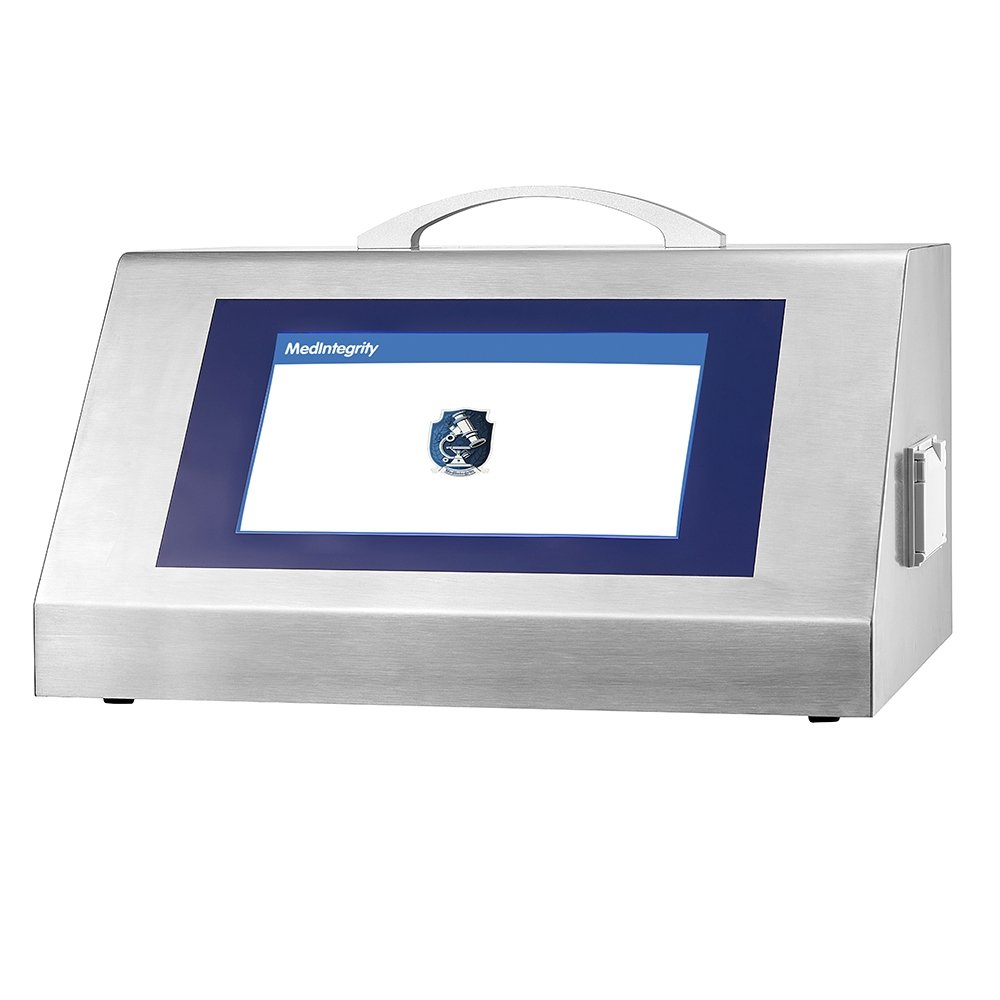
Choosing a reliable seller is as key as picking the right tech. MedIntegrity has set itself as a solid helper for pharmaceutical quality control gear.
Commitment to Precision, Compliance, and Innovation
메드인티그리티 gives a strong set of checked integrity testers. These fit many pharmaceutical uses:
Inspect the physical installation of the filter integrity tester. Ensure that all components such as the test head, pressure sensors, tubing connections, and valves are properly installed and tightened.
Provides technical consultation for system integration
Offers training programs and post-installation support services
All instruments align with FDA, EMA, and USP standards for CCI testing
Their fixes help pharmaceutical makers hit world quality marks. At the same time, they improve work flow.
As a solid helper for pharmaceutical quality control, MedIntegrity brings exact-made integrity testing fixes. These match the field’s toughest rule and work needs. With a full set of checked gear, from modern vacuum decay setups to special HVLD testers, the company aids makers in getting strong container closure integrity over many packaging types. Their promise goes past tools. It covers expert tech advice, smooth system linking, and focused help services. This makes sure clients not only hit rule marks like USP <1207> and FDA tips but also lift production speed. They guard patient safety via trusty, data-based flaw spotting.
FAQ
Q1: Are non-destructive integrity tests suitable for all types of pharmaceutical packaging?
A1: Non-destructive methods like vacuum decay or HVLD are ideal for many formats but may not be effective on porous materials or certain dry powder containers. Selection depends on container type, product characteristics, and sensitivity requirements.
Q2: What role does calibration play in maintaining tester accuracy?
A2: Regular calibration ensures that integrity testers provide accurate measurements. Use standard filters with known integrity characteristics to test the performance of the filter integrity tester.
Q3: How do I validate an integrity tester before routine use?
A3: Validation involves verifying installation (IQ), operational performance (OQ), and performance qualification (PQ). The test methods and parameters may need to be adjusted according to the characteristics of different filter types.
관련 게시물
-
How Integrity Testers Enhance Defect Detection in Pharma Packaging
December 19,2025

 Korean
  English
  Russian
  Spanish
  Portuguese
  German
  French
  Italian
  Arabic
  Dutch
Dutch  Japanese
  Vietnamese
  Malay
Malay  Thai
Thai