

PES Filter Cartridge Sterilization: What to Confirm Before Purchase
PES Filter Cartridge Sterilization: What to Confirm Before Purchase
PES filter cartridge sterilization should be specified against the exact cartridge and the cycle it will experience. Before ordering for pharmaceutical liquid filtration, agree on the sterilization method, temperature and exposure time, starting condition, pressure limits during heating and cooling, and the evidence required after exposure.
A material name or a temperature rating alone cannot establish that the complete filter assembly is suitable. The supplier’s confirmation needs to cover the offered configuration, while the pharmaceutical manufacturer retains responsibility for validating its sterilization process.
This distinction matters when replacing a cartridge in an existing line. A filter may fit the housing and have the expected pore rating, yet require different preparation or a different pressure limit during sterilization. Resolve those differences before comparing prices. Procurement can then evaluate a defined cartridge, with engineering and QA reviewing the conditions under which it will be used.
Which Cartridge Is Being Assessed
To assess the records, collect the part details from the quotation and technical description together. The membrane grade, layer arrangement, dimensions, adapter and seals need to identify the same item in both. Keep the current filter reference alongside them during review, so a construction change does not disappear behind a matching pore rating.
For Medintegrity PES cartridge filters, the thermal assessment covers polypropylene supports and structural parts as well as the PES membrane. Melt sealing is used in their construction. Bring the proposed layer arrangement and seal material into the review as part of the complete cartridge being ordered.
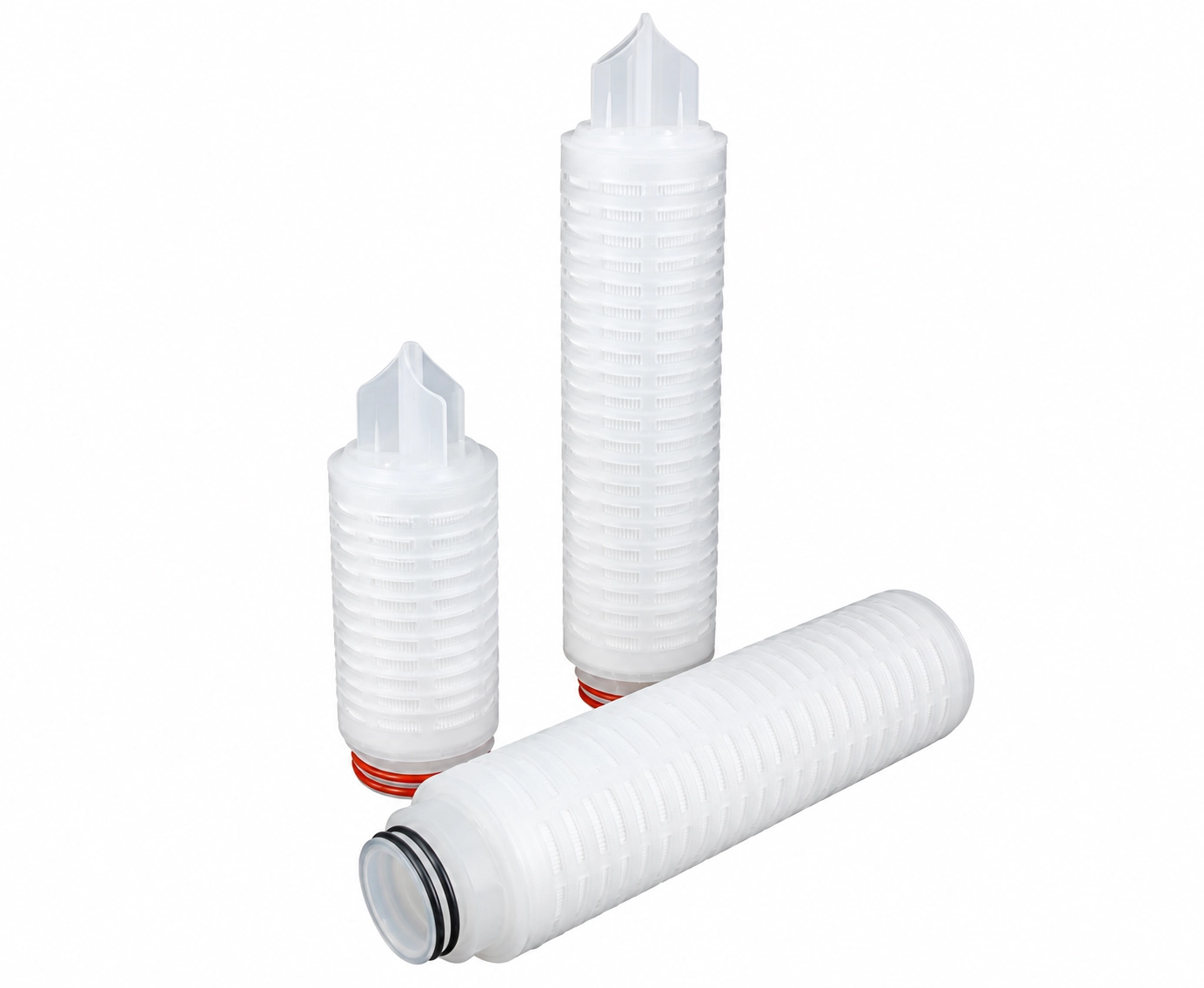
The intended filtration duty remains a separate approval question. For a final sterilizing barrier, the retention evidence and process-qualification basis have to support that use. Steam tolerance supplies no such conclusion. When replacing an established filter, review the construction changes along with the pore rating and dimensions before accepting the candidate for production.
SIP or Autoclave Conditions
An SIP request concerns the cartridge while it remains in the installed filter assembly. An autoclave request concerns a specified sterilizer load. Although both treatments may use steam, the position and starting condition of the cartridge can differ. State which arrangement is planned and how the filter will be handled or reconnected afterward.
In the Medintegrity PES cartridge discussion, start with the sterilization reference of 121°C for 30 minutes. The PES range includes NSS cartridges described for repeated online steam sterilization. Preparation and transition conditions still need confirmation for the selected part; the reference by itself permits neither a higher treatment temperature nor approval of the complete site cycle.
One detail worth resolving early is whether the filter starts wet or dry. Filters in the same train can have different preparation requirements; SIP wetting-condition guidance illustrates why a common treatment does not mean a common starting condition. Use the instruction for the candidate cartridge. Its hydrophilic membrane does not answer the preparation question on its own.
The application review needs the conditions before and after the hold, too. What pressures are expected as the assembly heats and cools, where will condensate go, and how frequently will the cartridge be treated? If the site procedure exceeds the conditions supported for the candidate, refer the mismatch to engineering. QA also needs to review any change proposed to the approved procedure.
Pressure Checks During Heating and Cooling
Pressure figures need their conditions attached. A maximum operating pressure at room temperature cannot be carried into a steam cycle without confirmation. Have engineering review the forward and reverse pressure differences allowed at the cycle temperatures. Two sides of the membrane are involved: the reading on one line gauge may not tell you the pressure difference across it.
Heating and cooling can deserve as much attention as the hold. An outlet restriction or a change in how pressure is released can alter the pressure difference across the hot filter. Review the drain route and pressure-control arrangement with engineering, including the measurement points. Work from the cartridge limits applicable to that treatment, without copying another product’s valve procedure.
For cartridge filter and housing configurations, the drawing is where the receiving housing, seals and service connections come together. Use it to identify any accessories outside the proposed supply. The filter-housing installation guide is useful context for steam connections and instrumentation; the project still needs its own arrangement checked against the installed cartridge.

Repeated Exposure and Production Use
Check the treatment behind a repeated-sterilization allowance before comparing the cycle numbers. Note how the cartridge was prepared, how long it was exposed and which construction the assessment covered. The resulting allowance is relevant only in that context. If the proposed site treatment differs, its relationship to the supplier’s evidence needs review.
Medintegrity PES cartridges have individual identification, production-batch traceability and an integrity test before delivery. Include the identifier when requesting release records or thermal-exposure evidence for the candidate. QA can then associate the cartridge with the supplied records during its review.
The results after exposure give the allowance its meaning. Review the integrity tests and relevant performance measurements, together with any assessment of seals or structural condition. Their acceptance criteria matter as much as the results. With that information, the review team can decide whether the exposure assessed represents the treatment planned for the filter.
Thermal exposure and use across batches are separate matters. FDA aseptic-processing guidance recommends routinely discarding sterilizing filters after a single lot, with justified repeated use incorporated into validation. A cartridge’s ability to withstand steam does not authorize processing further batches. Review the intended use period and replacement practice independently of the thermal allowance.
The Integrity Result and Sterilization Evidence
An integrity result is assessed against the filter’s applicable limits. Even a pass says nothing about whether all parts of the installation received an effective sterilization treatment. Keep the cycle qualification and controls available alongside the filter result during review. Procurement needs to know which documents address each question, so that both have an evidence basis.
The saved programs in Medintegrity Filter Integrity Tester V10 can be used with user access controls, audit trails and exported records in the proposed workflow. Agree on the program and records required for the cartridge. Sterilization validation and the choice of filter acceptance limits remain outside what those instrument functions establish.
QA needs to agree on the filter identity, method, conditions and review records before the test is used for the project. There is also the matter of preserving the required assembly state before processing. If the cartridge changes, revisit the relevant evidence and responsibilities. That review belongs before delivery, while the scope of the supply can still be agreed.
An RFQ for the Identified Cartridge
Send the PES filter cartridge supplier the part reference and proposed cycle with the commercial inquiry. Purchasing, engineering and QA can prepare those inputs together. The supplier can then respond to the intended thermal exposure and identify any conditions that still need assessment. The following information provides a useful basis for that discussion:
- Current and candidate part numbers, membrane grade, layer arrangement and dimensions
- Adapter, seal material and the receiving housing or assembly drawing
- Sterilization method, temperature, duration and required starting condition
- Heating and cooling conditions, pressure constraints and condensate handling
- Exposure frequency, intended use period and cartridge replacement practice
- Supporting evidence, integrity-test method and acceptance basis
- Quantity, destination and requested delivery timing
If the order is not yet tied to a layer arrangement, the evidence review is still provisional. Decide which single- or dual-layer construction will be bought and use the records applicable to it. More membrane layers may address capacity needs; they do not by themselves establish a better match to the sterilization cycle.
The quotation should identify the cartridge configuration and supporting evidence included in the supply. Scope any application review or qualification work separately, so the buyer can see what remains to be arranged. Two similar cartridge prices can leave different amounts of work before approval. Compare that scope, and obtain order quantities and timing from the actual proposal rather than assuming standard commercial terms.
အဆုံးသတ်ချက်
For a PES filter cartridge sterilization purchase, the useful outcome is a quotation tied to a named part and its planned treatment. Review the complete construction and preparation, then the exposure and transitions. Evidence for repeated treatment needs conditions that can be compared with the site’s cycle. Keep the integrity assessment and sterilization evidence available for QA approval, with any remaining work identified before placing the order.
Send the cartridge reference and assembly drawing for Medintegrity technical consultation, together with the proposed cycle and exposure frequency. Include the required testing records and supporting documents, quantity and destination. The discussion can then cover the filter configuration and quotation scope on the same basis as the site’s approval review.
FAQ များ
Q1: Can PES filter cartridges be autoclaved?
Autoclaving is possible for some cartridge products. For the purchase, obtain the supplier’s confirmation for the identified part and seals, with the preparation and permitted treatment specified. An SIP allowance cannot be assumed to cover the proposed autoclave load. Check that relationship even where the two methods use the same hold temperature.
Q2: How many steam sterilization cycles can a PES cartridge withstand?
Use the supplier’s allowance for the identified cartridge and treatment. PES as a material has no universal permitted cycle count. To assess the allowance for the project, the records need to describe the construction, exposure and checks afterward. Those details let QA compare the evidence with the proposed process.
Q3: Does a passing integrity test prove that the assembly is sterile?
No. The result concerns the filter’s integrity specification under defined test conditions. The effectiveness of sterilization concerns the cycle and assembly or load. Maintain the corresponding qualification evidence and the handling controls needed before use. A passing filter result cannot substitute for that separate assessment.
Q4: Does steam compatibility mean the cartridge arrives sterile?
No. The delivery condition still needs to be specified for the item in the order. Have the supplier confirm that condition for the candidate cartridge. Buying a filter for sterilization at the site and buying one supplied sterile are different requirements; neither can be established from the membrane’s ability to tolerate steam.

 Malay
 English
 Russian
 Spanish
 Portuguese
 German
 French
 Italian
 Arabic
 Dutch
 Japanese
 Vietnamese
 Korean
 Thai