

Boost Downstream Efficiency 2026 with MedIntegrity V10 Filter Integrity Tester
Boost Downstream Efficiency 2026 with MedIntegrity V10 Filter Integrity Tester
Why Filter Integrity Testing is Critical in 2026
The biopharma landscape in 2026 is defined by stricter regulations, quicker manufacturing schedules, and a strong emphasis on preventing contamination. In sterile drug manufacturing, the reliability of every filtration step can make or break a batch. That’s where filter integrity testing steps in — it verifies that filters perform as intended, preventing microbial ingress and ensuring product sterility.
Regulatory agencies such as the FDA and EMA now emphasize pre-use and post-use verification of sterilizing-grade filters. The integrity of the sterilised filter assembly should be verified by integrity testing before use, to check for damage and loss of integrity caused by the filter preparation prior to use. This ensures that the microbial retention capability validated during development holds true during production.
With rising production volumes and complex biologics entering pipelines, maintaining downstream efficiency has become a strategic priority. MedIntegrity’s V10 Filter Integrity Tester is designed to meet this demand — a next-generation system that transforms how manufacturers validate filters, combining speed, precision, and automation to enhance downstream efficiency.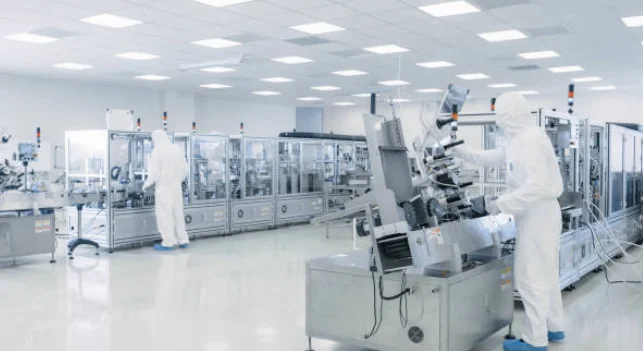
Key Challenges in Downstream Processing and Filtration
Ensuring Filtration Efficiency
Filtration efficiency directly impacts product yield and purity. Over time, membrane degradation or micro-leaks can compromise performance. Integrity testing identifies these issues early by measuring parameters such as bubble point or diffusive flow. Test the filter integrity tester with different types of filters, including different materials, pore sizes, and configurations. The tester should be able to accurately test and provide reliable integrity results for a wide range of filters. This adaptability is crucial when working with multiple membrane types across different process stages.
Impact of Contamination on Product Quality
Even a small gap in filtration can cause contamination that ruins entire production runs. A complete understanding of the potential bioburden in the liquid can help ascertain the risk of a damaged filter to the drug product. For biologics or vaccines, such contamination not only affects quality but also regulatory compliance and patient safety. In making medical devices or injectable drugs, undetected filter failures could trigger costly recalls or loss of market trust.
Pressure on Cost Reduction and Production Time
Each hour spent on validation means delays in batches and less efficient use of capacity. Traditional manual methods require intensive operator involvement and are prone to human error. Automated systems like MedIntegrity’s V10 Filter Integrity Tester drastically reduce testing time while maintaining precision. This lets technical teams to focus on higher-value operations instead of repetitive manual checks.
How MedIntegrity’s V10 Filter Integrity Tester Optimizes Downstream Efficiency
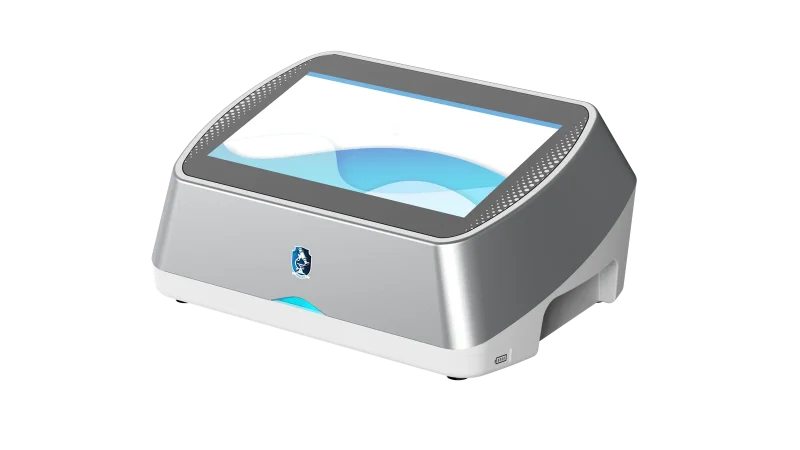
Fast and Reliable Testing
Speed is one of V10’s biggest advantages. Built for high-throughput environments, it cuts typical test durations from hours to minutes without sacrificing accuracy. This acceleration allows facilities to run more batches per shift while maintaining strict quality control.
Compatibility Across Different Membranes and Systems
Unlike many testers restricted to specific membranes or housings, MedIntegrity V10 supports diverse filter types such as PES, PTFE, and polypropylene membranes. The tester should be able to accurately test and provide reliable integrity results for a wide range of filters. It easily integrates into both single-use systems and stainless-steel setups through standard communication interfaces like RS232/USB — minimizing retrofitting costs.
Accurate and Consistent Results
Accuracy defines trust in any filter integrity tester. The V10 employs advanced algorithms derived from MedIntegrity’s legacy V8 platform known for its precision sensors with lower deviation bands. To meet offline online testing, using pressure sensors with higher accuracy and lower deviation bands to improve the test accuracy of the instrument. Real-time monitoring provides immediate feedback so that deviations can be addressed before they escalate into process deviations.
Cost Savings and Long-Term Benefits
Automation doesn’t just save time — it reduces operational expenses across maintenance, labor, and training. The total cost of ownership for V10 remains lower than comparable systems due to its modular design and minimal calibration needs. Over years of operation, this translates into measurable ROI through fewer failed batches and reduced downtime.
MedIntegrity’s V10 vs Competitor’s Filter Integrity Testers
| Feature | MedIntegrity V10 | Typical Competitor |
| Test Speed | Minutes per cycle | Up to several hours |
| Accuracy | ±0.1% deviation | ±0.3–0.5% deviation |
| Automation | Full auto sequence | Semi-manual |
| Interface | Touchscreen + remote access | Basic LCD |
| Compliance | FDA 21 CFR Part 11 ready | Limited support |
Features that Set MedIntegrity Apart
- Automation:The V10 features automatic self-diagnostics similar to earlier models where Automatic self-test function, self-test of multiple performance functions of the instrument itself was implemented — minimizing human error.
- User-Friendly Interface:A large touchscreen interface simplifies navigation even for operators new to digital testers.
- Data Management:Electronic signatures and authority management comply fully with FDA 21 CFR Part 11 standards for audit trails.
Cost-Benefit Comparison
While upfront investment may appear higher than basic models, savings accumulate rapidly through faster turnaround times and fewer retests. Facilities adopting automated testers typically report up to 30% shorter batch release cycles — a substantial competitive edge in contract manufacturing environments.
Benefits of MedIntegrity V10 for Biopharma Companies
GMP and FDA Compliance
Compliance remains non-negotiable in modern biomanufacturing. The V10 supports full traceability with electronic logs aligned with GMP principles. Scientific authority management design, password, permissions, authority grading, electronic signature, etc., in full compliance with FDA 21 CFR PART 11 requirements.
Improved Operational Efficiency
By automating test sequences across multiple filter housings simultaneously, facilities can accelerate lot release without compromising quality metrics such as differential pressure limits or flow rates.
Risk Mitigation
Each verified filter contributes directly to contamination control strategies required under evolving regulatory frameworks emphasizing Quality Risk Management (QRM). The need for a defined and documented contamination control strategy, informed through the application of Quality Risk Management principles.
How to Implement MedIntegrity’s V10 in Your Workflow
Integrating V10 into existing workflows involves straightforward steps:
- Connect via digital interface (RS232/USB) or network bus.
- Configure test parameters according to membrane type.
- Execute automated sequences directly from its touchscreen interface.
- Export results securely into LIMS or MES databases for traceability.
For multi-product facilities running both depth filters and cartridge filters across lines, The test methods and parameters may need to be adjusted according to the characteristics of different filter types. The system adapts seamlessly without requiring hardware changes — ideal for facilities scaling novel modalities like viral vectors or mRNA-based therapeutics.
Best practice recommends performing pre-use post-sterilization tests (PUPSIT) before each batch start-up followed by post-use verification after filtration completion — both operations easily handled within one automated cycle on the V10 system.
Conclusion
MedIntegrity’s V10 Filter Integrity Tester offers more than a small improvement. It reshapes how biopharma firms check their filtration setups in a time that calls for pace without compromise. By merging automation with regulatory-grade accuracy, it strengthens downstream processing reliability while cutting operational waste — empowering manufacturers heading into 2026’s competitive environment. Contact us today to optimize your filtration processes with the V10.
FAQs
Q1: What is the purpose of a filter integrity tester in biopharma manufacturing?
A: A filter integrity tester confirms that sterilizing-grade membranes remain intact throughout processing stages so contaminants don’t enter final products while maintaining compliance with GMP standards.
Q2: How does MedIntegrity’s V10 filter tester improve downstream processing?
A: It reduces testing time dramatically through automation while delivering precise readings that enhance throughput across multiple process lines.
Q3: What membranes are compatible with MedIntegrity’s V10 Filter Integrity Tester?
A: The system works effectively with PES, PTFE, polypropylene membranes plus other common materials used across biotech applications thanks to its flexible configuration options.
Q4: Can MedIntegrity’s V10 help with FDA and GMP compliance?
A: Yes — its electronic signature system aligns fully with FDA 21 CFR Part 11 requirements supporting traceable audit trails essential under GMP guidelines.
Q5: How does MedIntegrity’s V10 Filter Integrity Tester compare to other models on the market?
A: Compared with competitors’ units, it offers faster cycle times, greater measurement precision, seamless integration options, and lower total ownership costs over its operational lifespan.
 English
  Russian
  Spanish
  Portuguese
  German
  French
  Italian
  Arabic
  Dutch
Dutch  Japanese
  Vietnamese
  Korean
  Malay
Malay  Thai
Thai