

How to Select a Packaging Leak Tester in Pharmaceutical Production
How to Select a Packaging Leak Tester in Pharmaceutical Production
The protection of pharmaceutical packaging from contamination stands as a vital requirement to preserve product sterility and stability and maintain its effectiveness until the expiration date. A reliable packaging leak tester functions as a protective measure against all types of contaminants which include water vapor and oxygen and microbial agents. The selection process for leak detection systems demands thorough evaluation of multiple factors which include regulatory requirements and detection methods and production capacity and system connectivity to manufacturing operations.
MedIntegrity stands as a top manufacturer of pharmaceutical industry precision testing instruments when you need a reliable business partner. The company has operated for more than 15 years while maintaining its commitment to innovation to deliver complete solutions which address contemporary pharmaceutical manufacturing difficulties. Their product line includes complete packaging leak testers together with other analytical equipment.
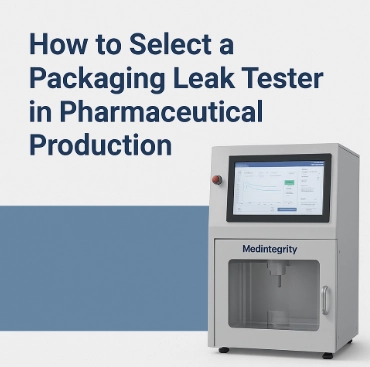
Key Criteria for Selecting a Packaging Leak Tester in Pharmaceutical Production
Compliance with Regulatory Standards
The selection of a leak tester requires absolute adherence to regulatory standards. The system needs to fulfill requirements from Good Manufacturing Practices (GMP) and FDA 21 CFR Part 11 and USP <1207> guidelines.
The testing methods fulfill all necessary requirements from FDA and GMP regulations as well as USP and EP standards. The MFT-600 and MFT-1000 models achieve audit-readiness and global regulatory approval because they meet all relevant standards. The systems include audit trail capabilities together with multi-level user permission systems to fulfill all requirements for data integrity protocols.
Sensitivity and Detection Capabilities
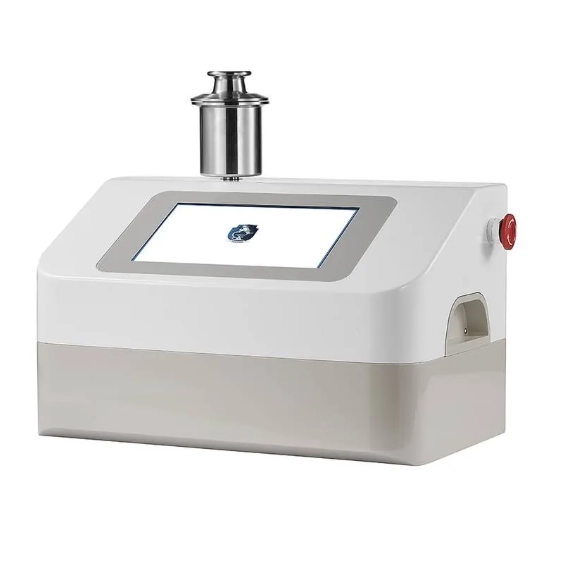
The leak tester needs to identify all types of packaging defects no matter how small they are. The MFT-1000 uses advanced vacuum decay and pressure attenuation techniques to detect tiny leaks that measure 1.5µm or smaller. The device proves excellent for testing vials and blister packs and prefilled syringes.
The MFT-600 provides dependable vacuum decay testing which detects apertures starting from 2µm for rigid and flexible container inspection. The system performs automatic defect aperture μm conversion from leak rate measurements.
Compatibility with Packaging Types
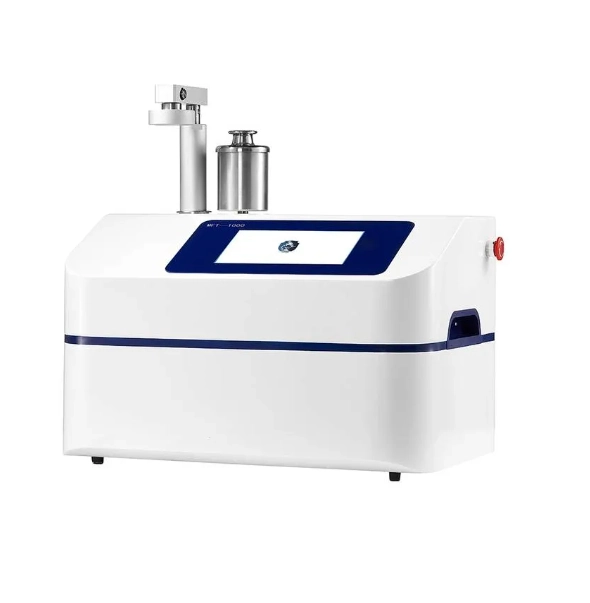
Your testing equipment needs to support all essential primary packaging arrangements. The device enables pharmaceutical packaging integrity testing to stop moisture and oxygen and microorganisms from entering products. The system performs sealing integrity tests on ampoules and vials and prefilled syringes (PFS) and bottles and pouches and bag-on-valve spray cans.
The company offers multiple test chambers which match different product requirements to enable MFT model adaptation for various product formats.
Advantages of Vacuum Decay Technology in Leak Testing
Vacuum decay stands as a dependable non-destructive method for testing container closure integrity through CCIT. The method provides precise results with high measurement consistency while meeting all relevant regulatory standards.
Non-Destructive Testing Process
The vacuum decay systems protect the sample integrity which makes them necessary for batch release testing. The system performs non-destructive testing which provides high accuracy and repeatable results with sensitive detection capabilities. The MFT models use vacuum-based detection for operation because this method does not damage the samples. The system prevents product waste while enabling additional testing or analysis without breaking the sterility seal.
High Accuracy and Repeatability
The quality control process of pharmaceuticals requires precise measurements. The MFT series includes differential pressure sensors which provide 0.01Pa resolution to deliver exact results while reducing the occurrence of incorrect test outcomes during multiple cycle tests.
The systems perform automatic leak flow calibration and store data for longer than five years to support advanced quality control systems in fast-paced laboratory settings.
Automation and Data Traceability Features
The implementation of automation technology leads to higher production efficiency while minimizing mistakes made by people. The instruments include built-in audit trail capabilities and USB/Ethernet/RS485 communication interfaces which enable easy connection to MES or LIMS systems.
The system features support 21 CFR Part 11 compliance through its ability to protect electronic records and generate real-time audit trails.
Evaluating Throughput Requirements in Production Environments
The operational efficiency of your process depends on achieving throughput alignment between benchtop testers for QC labs and inline solutions for high-volume production.
Suitability for Batch or Continuous Testing Modes
The MFT-600 operates as a semi-automatic system which makes it suitable for testing small batches of multiple product SKUs. The system enables fast product swaps and operates best in quality control laboratory settings.
The MFT-1000 system enables inline testing operations with quick cycle times and allows users to create test cavities that match their product requirements.
Test Cycle Time Optimization
The test system enables you to adjust test parameters through programmable settings which include dwell time and vacuum level and rejection thresholds for optimizing test cycles according to packaging types and sensitivity needs. The system performs automatic flow rate testing while it adjusts the aperture size throughout the entire process.
The system operates at high speed because it can process information in flexible ways which maintain precise results during production runs.
Scalability Across Production Sites
Standardized solutions from global manufacturers enable them to duplicate their operations across different facilities. MedIntegrity provides businesses with expandable platforms and centralized support services that include distant system diagnosis and scheduled maintenance programs.
Integration Capabilities with Existing Systems and Workflows
The implementation process remains undisturbed because efficient integration methods allow systems to operate smoothly within current infrastructure systems.
Compatibility with Automation Infrastructure
The MFT systems use modular design which enables users to connect them through PLCs or SCADA systems. The system provides 4-20mA and RS485 and 12V alarm output signals which allow users to connect it to robotic arms and automated packaging lines.
The engineering services team at MedIntegrity provides custom interface solutions for factory automation requirements.
Software Interoperability and Connectivity Options
The process of data centralization requires enterprise-level software systems to establish full connectivity. The system features Ethernet USB RS485 communication interfaces which enable seamless integration with LIMS and ERP platforms for improved departmental and site-wide traceability.
Ease of Operation and Operator Training Requirements
The system features an easy-to-use interface which decreases training requirements and minimizes operational mistakes. The touch-type interface of MedIntegrity enables users to perform operations quickly through its simple design which provides an intuitive user experience. MedIntegrity delivers complete training solutions which teach users about system operation and maintenance procedures and troubleshooting methods and calibration techniques.
Cost Considerations Beyond Initial Equipment Investment
The evaluation of equipment costs requires more than initial purchase prices because it needs to optimize total investment value throughout the equipment’s operational period.
Total Cost of Ownership Over Lifecycle
The long-term operational costs depend on three essential elements which include maintenance schedule and spare part accessibility and equipment calibration periods. MedIntegrity offers extended service agreements with continuous support throughout 24 hours to minimize equipment shutdowns and maximize equipment operational duration.Durable components ensure extended operational life under demanding conditions.
Return on Investment Through Quality Assurance
Early detection of packaging defects through non-destructive testing helps organizations prevent both expensive product recalls and non-compliance fines. The testing method prevents inventory loss that would occur through destructive testing procedures. The process improves initial production success rates while preserving product quality.
Support Services and Warranty Coverage
MedIntegrity provides worldwide technical assistance through its network of service centers and remote diagnostic systems and software maintenance and spare parts storage facilities which operate under warranty protection that includes scheduled maintenance and requalification services.
Vendor Selection Based on Technical Expertise and Service Reliability
Proven Experience in Pharmaceutical Applications
MedIntegrity serves as a dependable business partner for organizations that need injectable drug and biologic and vaccine solutions. Their case studies demonstrate how their solutions have achieved success at major pharmaceutical companies worldwide.
Commitment to Innovation and Continuous Improvement
Their research and development focus maintains alignment with current and future regulatory requirements. The company plans to introduce AI-based diagnostic systems and predictive equipment maintenance solutions which show their commitment to pharmaceutical quality assurance innovation.
Comprehensive After-Sales Support Infrastructure
The service teams at MedIntegrity provide continuous operation support through their installation guidance and remote diagnostic services. Their customer portal enables users to access immediate documentation and training materials.
FAQ
Q1: What is the most important factor when choosing a packaging leak tester?
A: Regulatory compliance (GMP, 21 CFR Part 11, USP <1207>) is the first priority, ensuring the chosen system meets all data integrity and CCIT requirements.
Q2: Is vacuum decay suitable for all pharmaceutical packaging types?
A: Yes, vacuum decay works for vials, PFS, ampoules, bottles, pouches, and many rigid and semi-rigid formats when properly configured.
Q3: Are leak tests destructive?
A: Vacuum decay testing is non-destructive, allowing samples to remain sterile and suitable for release or retesting.
Q4: What is the typical maintenance requirement for leak testers?
A: Maintenance usually includes periodic calibration, sensor checks, and scheduled servicing; vendors like MedIntegrity offer programs to reduce downtime.
Related Posts
-
How to Select a Packaging Leak Tester in Pharmaceutical Production
December 04,2025

 English
  Russian
  Spanish
  Portuguese
  German
  French
  Italian
  Arabic
  Dutch
Dutch  Japanese
  Vietnamese
  Korean
  Malay
Malay  Thai
Thai