

Why a Filter Integrity Tester Is Essential for Sterile Filtration Validation
Why a Filter Integrity Tester Is Essential for Sterile Filtration Validation
Pharmaceutical manufacturers must achieve sterility because it protects patient safety while following regulatory standards. Aseptic processing depends on sterile filtration as its main component which needs exact instrumentation for validating its operational performance. The filter integrity tester serves as an essential tool for this process.
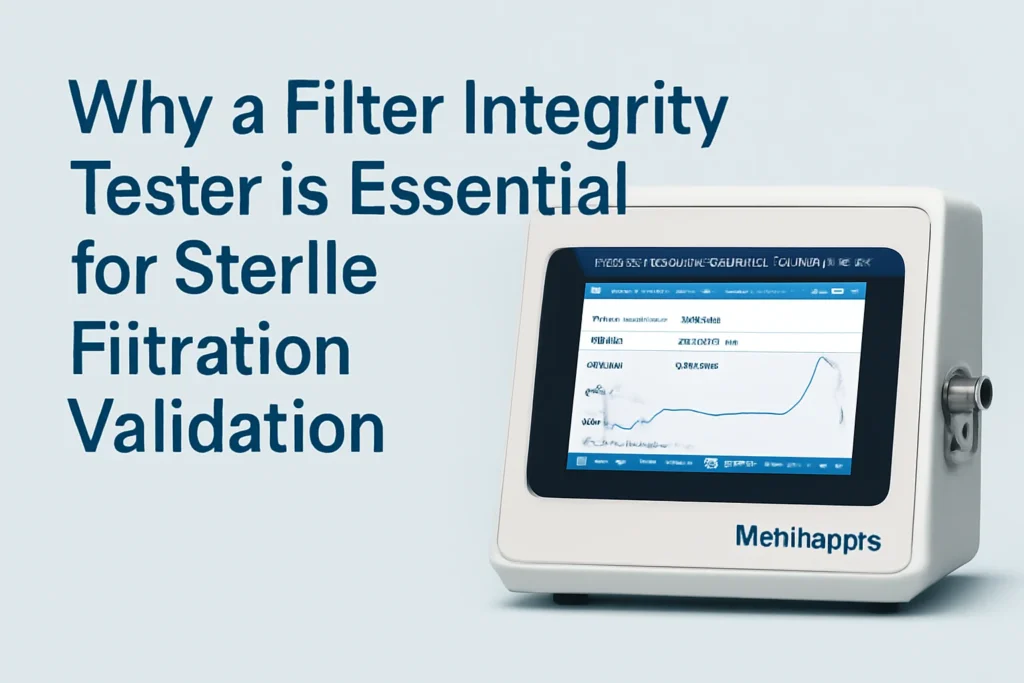
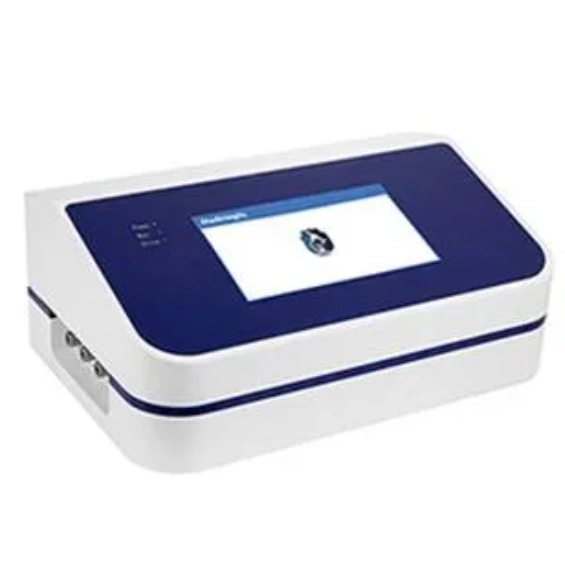
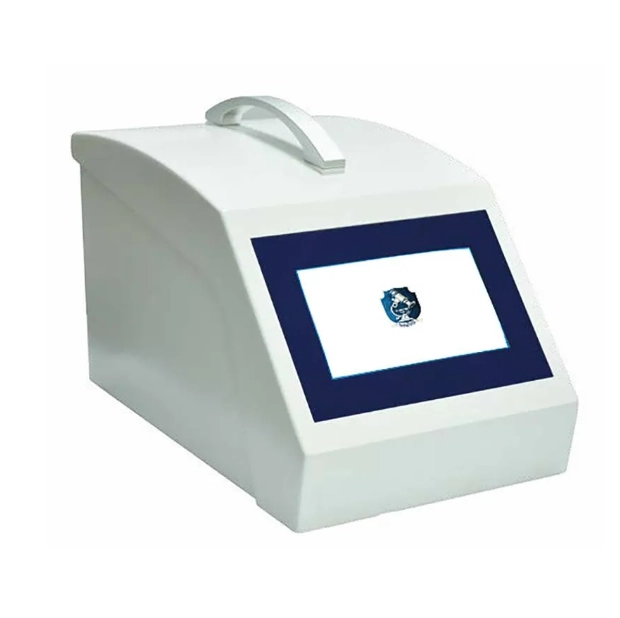
MedIntegrity operates as a reliable provider which manufactures testing instruments in the United States for pharmaceutical applications. The Filter Integrity Tester V8.0 and Filter Integrity Tester V6.5 products from MedIntegrity solve the intricate testing requirements that GMP facilities need across different countries.
Role of Filter Integrity Testing in Sterile-Filtration Validation
Ensuring Compliance with Regulatory Standards
The FDA and EMA and WHO already have strict standards in place which you probably know about. The agencies need validated filter integrity testing to verify that sterile filters used in aseptic processing remain effective.
Verify that all required documents for the filter integrity tester include the user manual and technical specifications and installation drawings and calibration certificates. The documents verify that your testing device fulfills all required performance standards and regulatory requirements. MedIntegrity instruments follow FDA 21 CFR Part 11 and USP and EP and GMP regulations which provides you with assurance during inspection or audit activities.
Verifying Sterility Assurance Before and After Filtration
The process of filter integrity testing which occurs before and after filtration serves to protect sterility assurance levels (SAL). The filter needs to show complete integrity before application because any breach would allow bacteria to enter while post-processing tests verify that the filter remained functional during all processing steps.
Perform multiple tests of the filter integrity tester on one filter under identical conditions to verify its testing consistency. The filter must produce identical results during testing because this proves its ability to support sterility assertions. The V8.0 model enables you to store 1000 pre-programmed tests and shows real-time test curves which improves your ability to verify filter performance.
Supporting Risk-Based Validation Approaches
A contemporary filter integrity tester produces more than pass/fail results because it creates measurable data which helps you determine process validation risk assessment levels.
The filter integrity tester requires testing with various filter types which include filters made from different materials and filters with different pore sizes and configurations. The testing capability enables risk-based validation approaches to assess different membrane types based on their individual risk levels. MedIntegrity provides intelligent software and analytics modules which enable you to identify patterns and create reference points for making better choices.
Key Features That Define an Effective Filter Integrity Tester
Precision and Sensitivity of Measurement Systems
The fundamental operation of any filter integrity tester depends on its ability to deliver precise measurement results. The system detects all product safety-threatening defects through its exact measurement of bubble point and diffusion flow and pressure hold values.
Standard filters with established integrity properties should be used to evaluate the performance of the filter integrity tester. The validation process verifies that your instrument maintains its high sensitivity during multiple testing runs. The V8.0 model includes precise pressure sensors which enable users to perform bubble point tests and diffusion flow tests and pressure holding tests with tight tolerance settings.
Automation and Data Integrity Capabilities
Manual testing methods create both unpredictable results and potential non-compliance issues. Automated systems perform two essential functions by optimizing operational efficiency and delivering uniform results.
The V8.0 tester includes an audit trail function and electronic signature capability and multi-level user management which meets all requirements of FDA 21 CFR Part 11. The system provides secure data management capabilities that enable users to access information quickly during audit inspections. The V6.5 version includes digital sensors and built-in printer support to achieve complete traceability.
Flexibility Across Filtration Applications
The different workflows in bioprocessing need equipment which can perform various tasks.
The filter integrity tester requires basic function testing to verify its operational capabilities. The device must deliver precise test pressures at different settings. The MedIntegrity models support various applications through their adjustable test parameters and extensive compatibility range which includes ultrafiltration membranes and irregular-shaped filters.
Advantages of Using MedIntegrity Filter Integrity Testers
Enhanced Workflow Efficiency in Validation Processes
GMP operations follow the principle that time directly equals monetary value. Your operation will achieve better results when you validate processes at high speed without sacrificing precision.
The V8.0 model features a 10-inch touch screen interface which enables operators to perform tests at high speed through its user-friendly interface. The V6.5 model offers basic operation through its simplified interface which shortens training duration for users.
Superior Reliability Through Engineering Design
Equipment operating in cleanrooms under GMP conditions requires durability as its main priority.
Perform a physical examination of the filter integrity tester installation site. The test head and pressure sensors and tubing connections and valves need to be securely installed and tightened for proper operation. The MedIntegrity units maintain long-term stability through built-in self-diagnostic systems which detect potential problems before they impact manufacturing operations.
Technical Support and Service Infrastructure from MedIntegrity
The organization needs to maintain technical excellence through its service delivery system. The service division of MedIntegrity provides complete support through installation services and preventive maintenance programs and remote diagnostic solutions and detailed user training programs. MedIntegrity provides you with access to calibration resources and application consulting services that match your specific environment needs.
Integration of Filter Integrity Testing into Quality Systems
Alignment with Quality by Design (QbD) Principles
Your control strategy should include filter integrity testing because it supports QbD initiatives.
The system enables Continuous Process Verification (CPV) through its ability to gather test data from all production batches. The system from MedIntegrity enables you to establish user permissions and access restrictions while monitoring system operational performance which supports active quality assurance practices.
Contribution to Batch Release Decisions in GMP Manufacturing
The results from automated integrity testers produce real-time data which determines when batches will be ready for release. The embedded pass/fail criteria in MES and LIMS platforms enables you to make quick decisions.
The V8.0 model operates in both online and offline modes while providing simple integration with automated systems through USB connections or custom industrial bus ports.
Documentation Support for Regulatory Submissions and Audits
All audit procedures need documentation that maintains both security and accessibility while ensuring complete accuracy. The systems at MedIntegrity produce reports that follow regulations while maintaining audit trails and electronic documentation. The system allows users to store records for more than five years while providing two export options which include PDF files through USB and raw data files for review purposes.
Technological Innovations in the V8.0 Model from MedIntegrity
Advanced Sensor Technology for High Accuracy Testing
The model employs advanced transducers which detect small pressure variations with precise accuracy. The system maintains stable calibration throughout different operational conditions to provide continuous long-term performance.
Intelligent Software Architecture for Process Optimization
The system uses smart algorithms to modify test parameters according to filter types without human intervention. The system provides real-time analytics to help users identify issues right away while software updates enhance system performance through time.
Modular Design Supporting Future Scalability
Your process evolution requires instruments that will maintain their performance level. The V8.0 system features modular architecture which enables users to add new filtration methods through system updates instead of needing to replace their entire system. The system gains better integration capabilities through the addition of wireless communication modules as optional features.
Application Scenarios Across Biopharmaceutical Workflows
Use in Upstream Cell Culture Media Filtration
Media sterility must be confirmed before inoculation because it represents a critical step. The filter integrity testers check post-sterilization integrity through two methods which include diffusion flow testing and bubble point testing.
Role in Downstream Purification Processes
The process of protein or vaccine purification requires you to preserve sterile conditions during all purification steps. The testers support operation with single-use systems which have become standard equipment in downstream processing applications.
Utility in Final Product Aseptic Filling Lines
The Final fill process serves as the ultimate opportunity to detect any problems that affect filtration performance. The MedIntegrity testers connect through digital interfaces to automated filling lines for real-time batch release assurance.
FAQ
Q1: What is a filter integrity tester used for?
A: The tests of bubble point and diffusion flow verify that sterile filters retain their barrier function throughout aseptic processing.
Q2: How does automation improve sterile filtration validation?
A: Automated test cycles reduce human error, improve repeatability, and provide compliant electronic records for regulatory audits.
Q3: Can these testers be integrated into automated production lines?
A: The V8.0 model includes digital interfaces together with modular design structures which enable straightforward integration between MES and LIMS systems.
Q4: How do I choose between the V6.5 and V8.0 models?
A: Select the version that matches your operational size because V6.5 works for standard validation tasks but V8.0 provides better automation capabilities.
 English
  Russian
  Spanish
  Portuguese
  German
  French
  Italian
  Arabic
  Dutch
Dutch  Japanese
  Vietnamese
  Korean
  Malay
Malay  Thai
Thai