

2026 Biopharma Membrane Selection Guide: Chemical Compatibility and Performance with MedIntegrity Cartridge Filters
2026 Biopharma Membrane Selection Guide: Chemical Compatibility and Performance with MedIntegrity Cartridge Filters
Introduction: Why Membrane Selection Matters More in 2026

Biopharma and pharmaceutical filtration in 2026 faces stricter requirements for contamination control, extractables, and batch consistency. High-value biologics, sterile liquids, and sensitive pharmaceutical formulations require more reliable filtration validation than before. For B2B buyers, selecting cartridge filters only by pore size may lead to process instability. Membrane material, chemical compatibility, protein binding, sterilization resistance, throughput, and validation data all directly affect filtration performance and final product quality.
MedIntegrity’s cartridge filters meet these varied demands with several material choices—PES, PTFE, HPP, and Capsule Filters—suited to different lab and production-scale Biopharma filtration tasks.
What Defines a Good Biopharma Cartridge Filter?
Chemical Compatibility
Chemical compatibility is not just a material specification on paper. In real production environments, it determines whether a filter can remain stable under repeated exposure to buffers, WFI systems, cleaning agents, and solvent-based pharmaceutical fluids.
When compatibility is insufficient, membrane deformation, leaching, or reduced flow performance may appear during operation. These issues are often not visible during initial testing, but become clear during batch scaling.
Temperature fluctuations, pressure cycling, and contact time also influence long-term compatibility performance. This is why many GMP facilities validate filters under real process conditions rather than relying only on catalog data.
Low Protein Binding
Low protein adsorption is critical when filtering protein-containing pharmaceutical formulations such as biologics, vaccines, and injectable sterile solutions. Excessive protein binding can lead to product loss or changes in product stability. In GMP environments, maintaining consistent yield and batch reproducibility is essential.
Flow Rate and Throughput
A solid filter design shows high porosity and a well-planned filtration area. This keeps flow steady even if pressure changes. A steady pressure drop means fewer changes per batch. That helps cut downtime in big bioprocessing runs.
Sterilization and Integrity Testing
GMP facilities need filters that handle steam sterilization or high-pressure cleaning. They must keep their structure intact.
Pharmaceutical products, such as injectable and infusion solutions or those which come in contact with open wounds, must conform to exactly defined quality standards. The desired quality of the final product can only be obtained when the entire production process is adequately safe guarded against contamination.
These sentences emphasize how membrane filter technology plays a central role in contamination control at critical process points.
Key Membrane Materials for Biopharma Applications
PES Membrane for Aqueous Biological Fluids
Polyethersulfone (PES) membranes are naturally hydrophilic and easy to wet. They are widely used for water-based pharmaceutical and sterile liquid filtration. Their low protein adsorption helps reduce product loss during sterile filtration processes. Typical applications include vaccines, blood-derived products, eye drops, WFI systems, and injectable pharmaceutical solutions. For aqueous filtration requiring stable throughput and low extractables, PES membranes provide consistent performance.
PTFE Membrane for Gas, Solvent, and Aggressive Chemical Filtration
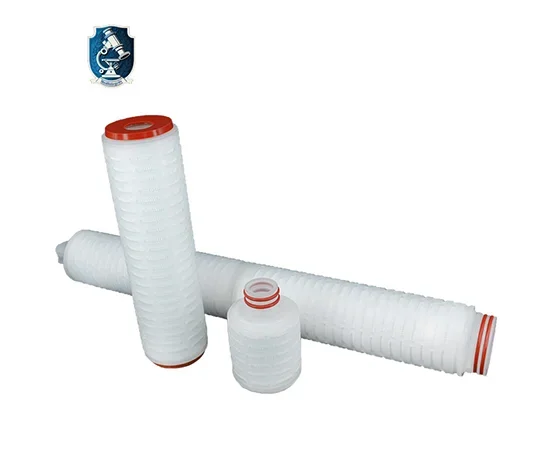
Polytetrafluoroethylene (PTFE) membranes are hydrophobic and designed for gas and solvent filtration applications. They are widely used in compressed air sterilization, nitrogen filtration, tank venting systems, and solvent-based pharmaceutical processes. PTFE membranes offer strong chemical resistance against acids, alkalis, and aggressive solvents, where hydrophilic membranes may fail or degrade.
HPP Cartridge Filters for Pre-Filtration and Membrane Protection
High-performance polypropylene (HPP) cartridge filters act as pre-filters before delicate downstream membranes, such as PES or ultrafiltration stages. They cover a pH range from 1–14 and offer various retention ratings. This lets them deal with heavy particulate loads smoothly while keeping differential pressure low. Their extended service life shields costly final filters from early clogging.
Capsule Filters for Small-Batch and Laboratory Workflows
Capsule filters are compact disposable filtration units that do not require stainless steel housings. They are widely used in laboratory-scale testing, pilot production, and small-batch pharmaceutical workflows. Applications include buffer preparation, solvent filtration, sterile liquids, and process validation trials. Their single-use design reduces cleaning requirements and improves workflow flexibility in R&D and production environments.
Membrane Selection by Downstream Application
| Process Fluid Type | Recommended Filter | Direction | Key Selection Reason |
| Buffers & WFI | PES membrane | idrofilico | Low protein adsorption & stable aqueous filtration |
| Sterile pharmaceutical solutions | PES membrane / Capsule Filter | Aqueous sterile liquids | Suitable for lab-scale and pilot filtration |
| Organic solvents | PTFE membrane | Chemical-resistant | Solvent compatibility |
| Compressed air / nitrogen | PTFE membrane | Gas filtration | Hydrophobic barrier |
| Pre-filtration before UF/RO | HPP cartridge filter | Particle removal | High dirt-holding capacity |
| Lab-scale biological samples | Capsule Filter | Disposable format | Flexible use |
Buffer and WFI Filtration
Hydrophilic membranes like PES give steady flow with few extractables. This is key for making sterile WFI systems. Those systems need consistent conductivity levels.
Vaccine and Biologic Filtration
PES cartridge filters stay the top pick. Their low protein binding helps keep biologics stable. This trait is vital.
Solvent and Gas Sterilization
PTFE cartridge filters lead in this area. They resist organic solvents and hydrophobic gas streams very well.
Pre-Filtration Before UF, NF, or RO Systems
HPP filters work as tough barriers. They catch particulates before ultrafiltration (UF), nanofiltration (NF), or reverse osmosis (RO) modules.
Laboratory and Small-Batch Biopharma Testing
Capsule filters make setup switches easy between tests. They keep sterility without added hardware costs.
Performance Factors Buyers Should Compare Before Ordering
Pore Size and Retention Target
Choose pore size based on what microbes to hold back. For sterilizing-grade jobs, 0.22 µm is common. For pre-filtration, it’s about particle goals.
Operating Temperature and Pressure
Look closely at mechanical ratings. Going over limits in steam-in-place cycles can hurt housing seals or pleat strength.
Sterilization Method
Steam sterilization works for reusable cartridges. But disposable capsule formats suit single-use aseptic work better.
Traceability and Batch Control
In regulated B2B buying setups, unique cartridge numbering aids traceability across batches. This meets GMP documentation needs.
Integrity Testing Compatibility
Filter integrity testing checks if units match retention specs after sterilization. It uses the maker’s reference values.
Microberetentive filtration (bacteria retentive according to the European Pharmacopeia 2 and DAB 10) or sterile filtration (sterilization by filtration in conformance with the current USP), respectively, is an important process step in the manufacture of sterile pharmaceutical products.
Established non-destructive methods include bubble point or diffusion testing compared against reference values provided by MedIntegrity’s technical documentation.
How MedIntegrity Cartridge Filters Support Biopharma Procurement
Material Options for Different Process Needs
Integrità Medica has a full lineup. It includes PES for aqueous systems, PTFE for solvents/gases, HPP for pre-filtration layers, and disposable capsule designs. All are built around proven cartridge filter setups.
Fit for GMP-Oriented Facilities
Every MedIntegrity unit allows full traceability. It uses serialized labeling that fits GMP standards. This is crucial for audits. They require proof of sterility from raw materials to final packaging.
Support Across Filtration and Testing Workflows
MedIntegrity goes beyond the filters. It offers tools like filter integrity testers. These help in pharmaceutical validation. They check system performance after setup or cleaning.
Practical Buying Checklist for 2026
Before Selecting a Filter
- Identify fluid chemistry: buffer vs solvent vs gas
- Determine pH range tolerance
- Evaluate protein sensitivity
- Review target flow rate
Before Scale-Up
- Validate compatibility under actual process conditions instead of relying solely on catalog data
Before Final Procurement
- Confirm pore size distribution
- Match housing connection type
- Review maximum operating pressure/temperature
- Verify sterilization method compatibility
- Request documentation package including certificate of analysis
Conclusione
Choosing the right membrane has become a key choice in today’s Biopharma filtration plans. In 2026, rules are tougher, and biologics are more complex. Picking the correct cartridge filter decides if compliance works and if processes save money. PES membranes give solid results in aqueous biologics. PTFE manages tough gases or solvents. HPP acts as strong pre-filtration guards. Capsule Filters ease lab-scale tests without extra gear.
For teams seeking validated solutions across these categories, MedIntegrity supplies cartridge filters with technical backing. They match everyday production needs—from sterile fill-finish lines to research labs trying new methods. Contatta MedIntegrity oggi stesso to find the perfect filter solution for your production needs.
Domande frequenti
Q1: What is the best membrane material for aqueous biopharma filtration?
A: PES membrane is often preferred because it is hydrophilic with low protein adsorption properties suited to biological fluids such as vaccines or serum formulations during biopharma filtration processes using cartridge filters.
Q2: When should PTFE cartridge filters be used in biopharma applications?
A: PTFE cartridge filters work best when filtering gases like compressed air or nitrogen or handling solvent-rich streams containing acids or alkalis due to their strong chemical resistance characteristics.
Q3: Why is chemical compatibility important when selecting cartridge filters?
A: Poor compatibility can cause swelling or leaching from the membrane surface leading to extractables contamination that affects product purity during downstream processing stages of biopharma filtration.
Q4: How do HPP cartridge filters support downstream membrane systems?
A: HPP cartridges function as protective pre-filters capturing particles before fine-grade membranes such as PES units reducing fouling risk while extending operational life cycles within integrated bioprocess setups.
Q5: What should B2B buyers confirm before purchasing biopharma cartridge filters?
A: Buyers should confirm pore size rating accuracy along with pH range coverage pressure rating sterilization tolerance application-specific fluid type integrity testing requirements plus traceable batch documentation offered by MedIntegrity’s supply framework.

 Italian
  English
  Russian
  Spanish
  Portuguese
  German
  French
  Arabic
  Dutch
Dutch  Japanese
  Vietnamese
  Korean
  Malay
Malay  Thai
Thai