

Single-Use Bag Integrity Test Validation in 2026: Pressure Decay, ASTM E3336 & Acceptance Criteria
Single-Use Bag Integrity Test Validation in 2026: Pressure Decay, ASTM E3336 & Acceptance Criteria
Single-use bags are widely used in pharmaceutical manufacturing for fluid handling, storage, and other process operations. Yet single-use bag integrity testing is not simply a matter of pressurizing a bag and watching a number on the screen. QA and validation teams need to know what the method is expected to detect, whether the result is repeatable, and how the pass/fail limit was established.
Those questions matter even more when a test moves from engineering trials into routine GMP use. Bag geometry, pressure, stabilization time, temperature, support surfaces, and the selected acceptance criterion can all affect the response.
For projects built around pressure-based testing, MedIntegrity offers dedicated bag integrity testing systems for pharmaceutical manufacturing applications.
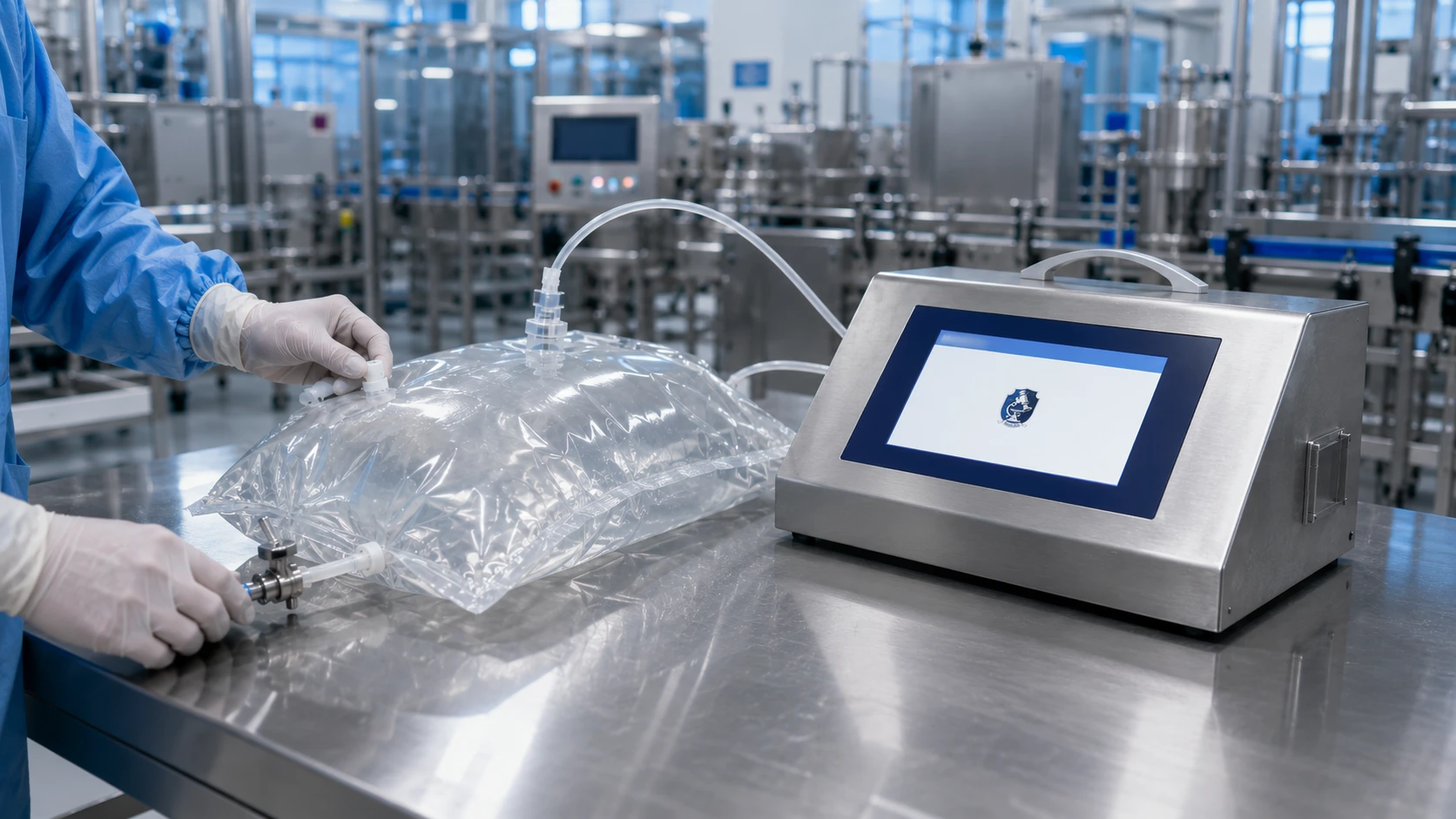
Validation Framework for Single-Use Bag Integrity Testing
A useful bag integrity test validation starts by defining what the test needs to prove. This comes before choosing pressure settings or comparing tester specifications. A method intended to screen for a defined leak condition may have a different validation basis from one used to support an integrity claim. Getting that distinction clear early also makes equipment discussions more productive.
Leak Detection vs. Integrity Confirmation
A single-use bag leak test can be developed around a defined leakage target. For a broader integrity claim, the method also needs demonstrated detection capability that fits the barrier requirement of the actual application.
Instrument resolution alone cannot establish that capability.
A practical validation review normally begins with the bag configuration, test stage, connections, support arrangement, and relevant defect condition. Testing an empty bag on a bench, for example, may not represent the response of the same assembly once it is positioned in a holder.
ASTM E3336-22 covers physical integrity testing of empty, clean, dry single-use manufacturing systems using pressure-based and tracer-gas-based methods. It addresses method principles, equipment, challenges, and validation rather than treating one instrument reading as sufficient evidence.
ASTM E3244, E3336, and F2095: Different Roles in the Test Strategy
ASTM E3244-23 provides the broader quality-risk-management and life-cycle framework for integrity assurance of single-use systems. E3336-22 moves into the physical test method itself.
ASTM F2095-07(2021), meanwhile, covers pressure-decay leak testing of nonporous flexible packages with and without restraining plates. Package volume is one factor that affects the achievable leak-rate sensitivity, and restraining plates can be used to stabilize flexible package volume in the applicable method.
For a pharmaceutical bag project, the applicable standard and revision belong in the site protocol or URS. Once that framework is clear, the next task is turning it into test parameters that remain repeatable on the actual bag.
Critical Parameters in Pressure Decay Test Validation
Pressure-decay testing has a simple basic sequence: pressurize, stabilize, measure, and evaluate. Flexible bags make the details less simple. Film moves after inflation, gas temperature can shift, and larger internal volumes change the pressure response. A reliable pressure decay test validation therefore depends on the complete setup rather than one default recipe.
Test Pressure, Stabilization Time, and Measurement Time
More pressure is not automatically better. The selected test pressure needs to produce useful discrimination without turning routine testing into an unintended stress test.
Stabilization is equally important. Flexible film may continue expanding or settling after pressurization. Starting the measurement period too early can make normal mechanical behavior look like leakage.
Test duration then has to balance detection capability with the routine workload. A method that takes too long may become difficult to use when many assemblies need testing during the same production window.
Teams still selecting a basic test technology can review MedIntegrity’s comparison of pressure drop, vacuum decay, and mass extraction bag testing methods separately rather than mixing method selection with method validation.
Bag Volume, Temperature, and the Masking Effect
A validated program cannot automatically be transferred from one bag size to another.
A small 2D bag and a larger 3D assembly may differ in internal volume, film movement, stabilization behavior, fittings, and contact with surrounding surfaces. Temperature variation can also shift pressure during the test even when the assembly itself has not changed.
Surface contact introduces another issue: masking effect in pressure decay testing. If a defect sits directly against a holder or support surface, the leak path can become partly blocked, reducing the measured response and creating a risk of a false pass.
The validation setup therefore needs to represent the physical condition in which routine testing will actually occur.
Establishing Detection Capability and Acceptance Criteria
The pass/fail limit is often the hardest part of pharmaceutical bag integrity testing. Copying a pressure-decay limit from another bag or another test program may produce a convenient number, but it does not establish that the method can distinguish an acceptable assembly from a relevant defect.
The stronger approach is to characterize normal bag behavior first, then compare it with controlled defect response.
Intact-Bag Baseline and Controlled-Defect Testing
Repeated tests on representative intact bags help establish normal variation from the bag, fittings, support arrangement, temperature, and measurement sequence.
Controlled defects can then be used to challenge the method against the validation objective. If intact and defective populations overlap too heavily, moving the acceptance limit is rarely the best first fix. Pressure, stabilization time, test duration, fixture contact, connections, or the detection target may need further work.
This is how bag integrity test acceptance criteria become tied to actual test performance instead of a generic instrument setting.
Instrument Sensitivity Is Not the Validated Detection Limit
This distinction also matters when comparing equipment quotations.
MedIntegrity publishes a 0.1 Pa sensitivity and a 0–5000 Pa pressure range for the BGT-120 and BGT-200, with additional pressure ranges available as customized configurations. The listed test duration is 2–8 minutes.
Validated detection capability belongs to the complete application: bag configuration, test conditions, connections, fixture, program, and validation data. Once that capability and the acceptance criterion are established, attention shifts from method development to controlling the approved method in routine GMP use.
Transferring a Validated Bag Integrity Method into Routine GMP Testing
Routine GMP bag integrity testing creates a different set of questions. Operators need access to the correct program, QA needs traceable records, and parameter changes cannot become informal adjustments between tests. Where electronic records fall within the site’s control strategy, user permissions, audit trails, electronic signatures, data retention, and 21 CFR Part 11 requirements may also enter the URS.
At this stage, equipment capacity is useful only when it matches the real workload.
Matching the Tester to Programs, Users, and Records
Il MedIntegrity BGT-120 Bag Integrity Tester uses the pressure-drop principle and is designed as a stand-alone, portable system. Its published configuration includes 80 programs, 80 users, at least 12,000 historical records, an audit trail of at least three years, and a standard battery. IQ, OQ, PQ, and SOP support is also listed for the model.
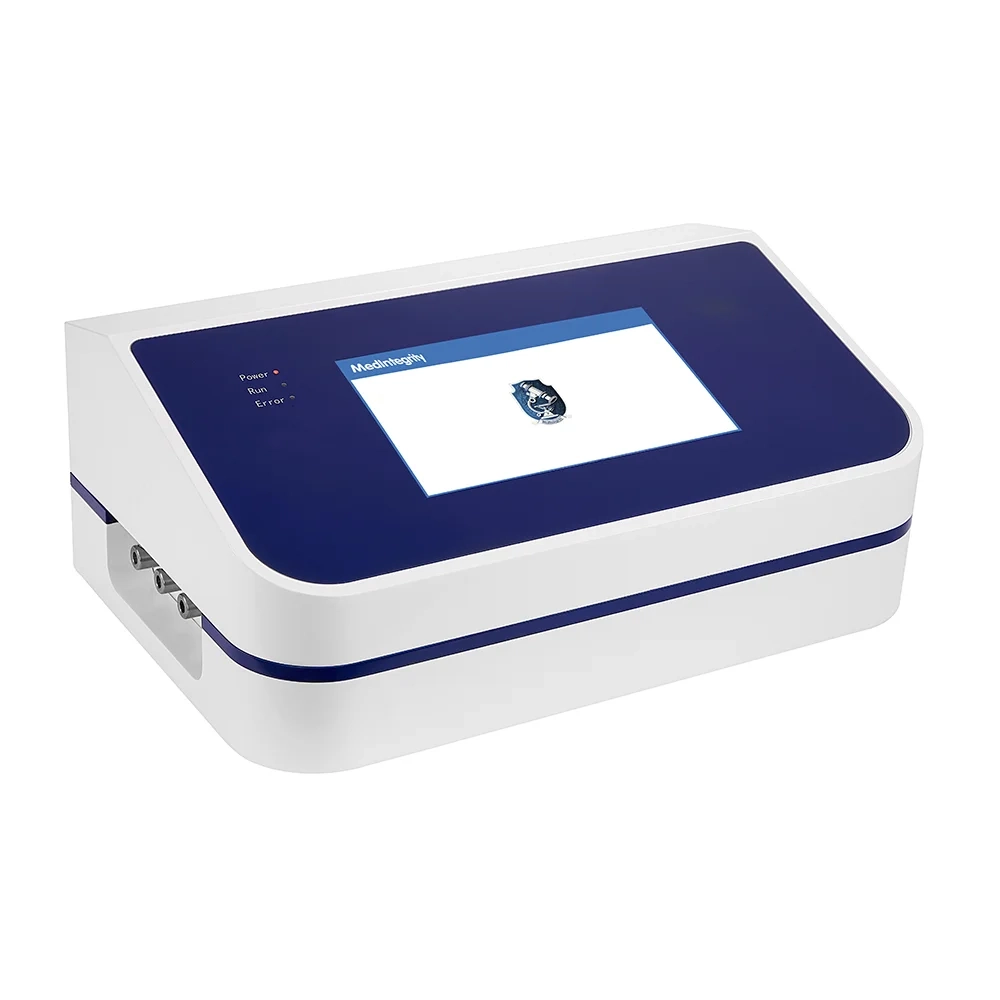
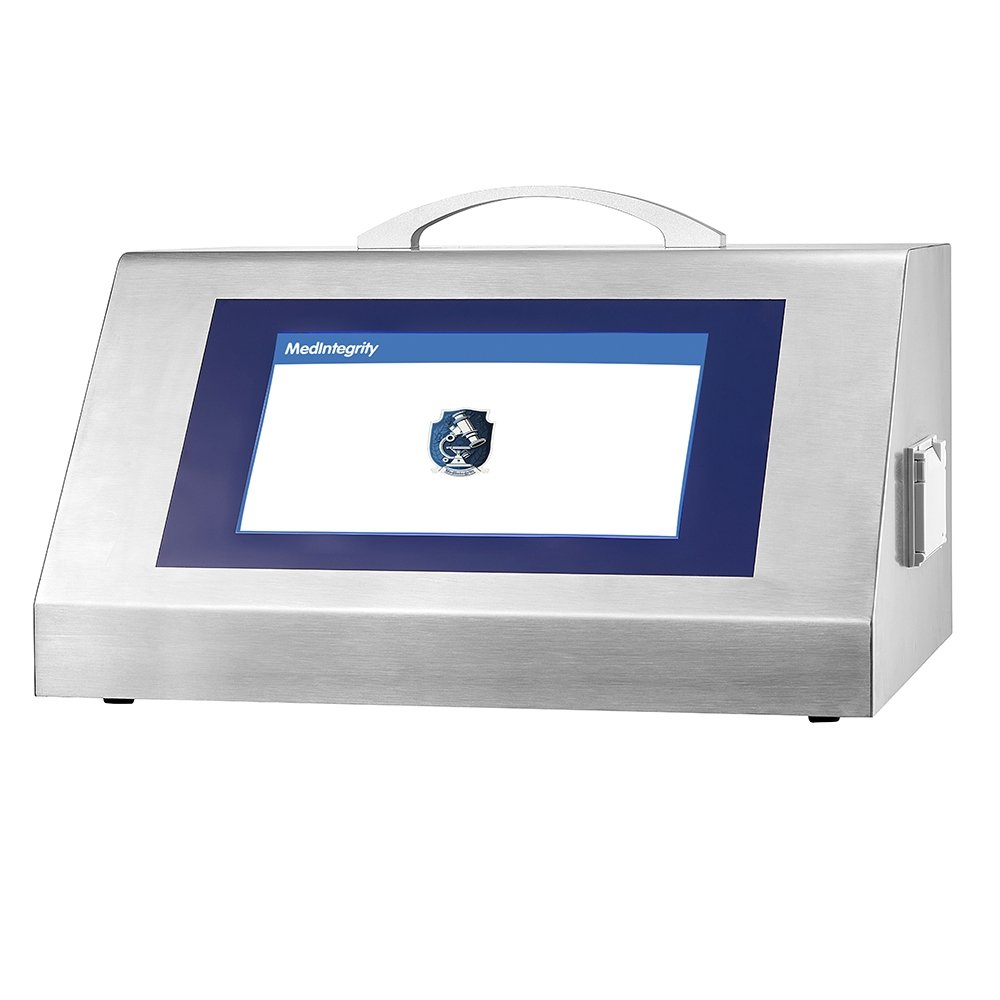
For projects managing a larger number of programs, users, and retained records, the MedIntegrity BGT-200 Bag Integrity Tester provides higher data capacity. Its published configuration includes 1,000 programs, 1,000 users, 300,000 historical records, electronic signatures, audit-trail functions, USB data export, and configurable communication interfaces.
The purchasing decision is therefore less about choosing the longer feature list and more about matching the instrument to the site’s validated programs, testing frequency, data-control needs, and qualification plan.
Defining URS and RFQ Inputs for Bag Integrity Testing
Good technical information at the RFQ stage saves time later. A request for “one bag integrity tester” leaves too many variables unresolved for engineering review.
This is also timely in 2026. The updated BioPhorum-BPSA Single-Use User Requirements Toolkit puts renewed attention on clearer user requirements and supplier communication for single-use projects.
Information to Prepare Before Supplier Review
A useful initial URS or RFQ can include:
- bag type, volume, dimensions, and 2D or 3D configuration
- ports, tubing, connectors, holder arrangement, and available drawing
- intended test stage and expected testing frequency
- existing test pressure, stabilization time, and measurement time
- detection requirement and acceptance criterion, if already established
- user access, audit trail, electronic signature, and data-export requirements
- FAT, SAT, IQ/OQ/PQ, calibration expectations, destination market, and project schedule
A finished validation protocol is not needed for the first technical discussion. Enough application detail is. It gives QA, engineering, procurement, and the supplier a common basis for discussing configuration and quotation scope.
Conclusione
Reliable single-use bag integrity testing comes from a defined validation claim, representative test conditions, demonstrated detection capability, and evidence-based acceptance criteria.
ASTM E3244 provides the wider integrity-assurance framework, ASTM E3336 addresses physical testing of single-use manufacturing systems, and ASTM F2095 covers pressure-decay testing for applicable flexible-package configurations. For routine use, pressure, stabilization, test duration, bag geometry, support contact, program control, and data requirements all need to work as one method.
For a new bag integrity testing project, contact MedIntegrity for an application review or quotation with the bag configuration, current test method, acceptance criteria where available, data requirements, and qualification scope.
Domande frequenti
Q1: What is the difference between ASTM E3244 and ASTM E3336 for single-use bag integrity testing?
A: ASTM E3244 provides a broader risk-based and life-cycle framework for single-use system integrity assurance. ASTM E3336 focuses on physical integrity test methods, including pressure-based and tracer-gas-based testing, together with method validation. The two standards address different parts of the same integrity strategy.
Q2: Is pressure decay a leak test or an integrity test?
A: Pressure decay is a physical leak-detection method. Using it to support an integrity claim requires validated detection capability that fits the specific integrity requirement and test configuration.
Q3: How are pressure decay bag integrity test acceptance criteria established?
A: Start with repeatable results from representative intact bags, then compare them with suitable controlled-defect challenges. Pressure, stabilization, measurement time, bag configuration, and normal method variation need to be defined before the final pass/fail criterion is set.
Q4: Can the same pressure decay test program be used for different bag sizes?
A: Not automatically. Bag volume, geometry, fittings, film movement, support contact, and stabilization can change the pressure response. A different configuration needs technical assessment before an existing validated program is transferred.
Q5: What can cause a false pass during pressure decay bag testing?
A: A defect masked by holder contact is one possible cause. An unsuitable test program, insufficient stabilization, or a setup with inadequate discrimination for the target defect can also affect the result. These issues are best resolved during method development rather than after routine testing begins.
 Italian
  English
  Russian
  Spanish
  Portuguese
  German
  French
  Arabic
  Dutch
Dutch  Japanese
  Vietnamese
  Korean
  Malay
Malay  Thai
Thai