

TOC vs Conductivity: Do Pharmaceutical Water Systems Need Both?
TOC vs Conductivity: Do Pharmaceutical Water Systems Need Both?
TOC measures organic carbon in water. Conductivity measures how readily the water carries an electrical current, influenced by dissolved ions. Where a pharmaceutical water specification requires both attributes, both need assessment. A satisfactory reading for one cannot establish that the other is acceptable; the two tests cover different chemical properties.
For procurement, the TOC vs conductivity question is therefore about the results an equipment package must deliver. Conductivity can also be used inside a TOC analyzer’s detection process. That does not, by itself, make the analyzer a replacement for an independent water conductivity test. The distinction needs to be resolved before a quotation is accepted.
The difference between TOC and conductivity
A purchase specification should name the result, rather than only the detector technology. The table below separates the two analytical tasks. Neither TOC nor conductivity identifies the particular compound or ion responsible for an abnormal reading.
| Procurement question | TOC는 | Conductivity |
| What does the result address? | Organic-carbon content. | Electrical conduction associated with ions. |
| Can it identify the substance? | No compound identification. | No specific ion identification. |
| Does a passing result prove the other is acceptable? | No. | No. |
| What must be specified? | Application, range and TOC method requirements. | Application, conditions and conductivity method requirements. |
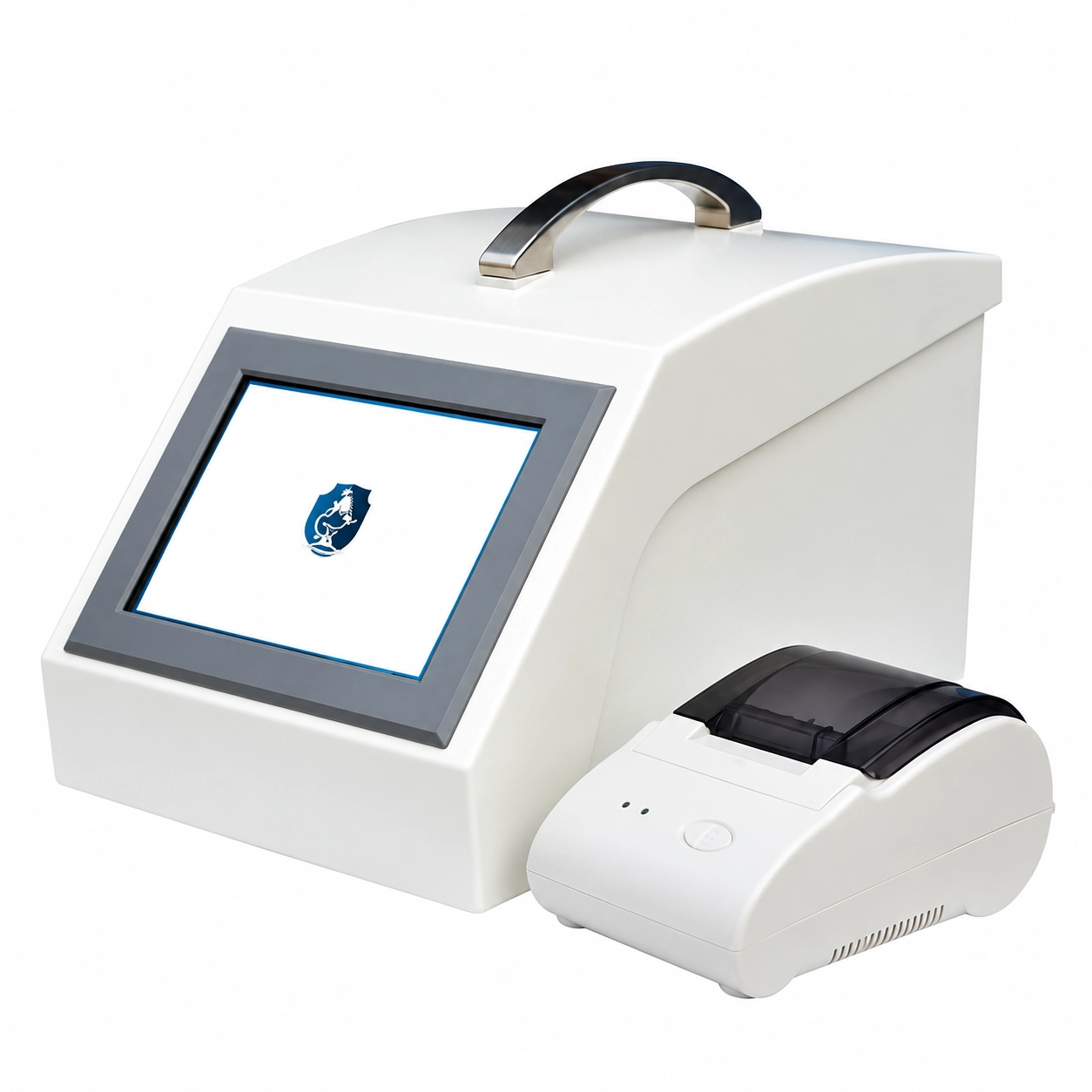
The Medintegrity TA-2.0 TOC analyzer measures 0.001–1.5 mg/L TOC, equivalent to 1–1,500 ppb for the stated water measurement. Buyers can compare this range with expected samples before requesting a configuration review. Method suitability still requires evaluation for the intended use.
Why pharmaceutical water may need both measurements
The two results cover different chemical attributes. Understanding that difference prevents an incomplete instrument specification and helps explain why apparently conflicting results deserve attention.
Organic carbon and dissolved ions
An organic-carbon result cannot be calculated from conductivity using a universal conversion factor. The response depends on what is in the water. Some organic compounds need not contribute a conductivity response that adequately represents their concentration, while ionic substances may contribute no organic carbon at all.
Consider two familiar substances: sucrose contains organic carbon, whereas sodium chloride does not. Dissolved sodium chloride nevertheless contributes ions to the water and affects its conductivity. This is a chemical illustration of the two measurement targets, not an instrument performance test or a claim about a particular sample.
USP General Chapter 643 describes TOC as an indirect measure of organic molecules in pharmaceutical waters. It also separates that measurement from microbiological and endotoxin control. A low TOC value does not replace those controls.
Measurement conditions and interpretation
Temperature affects conductivity, as do contributions from water itself and dissolved gases such as carbon dioxide. These factors are addressed in USP General Chapter 645. A numerical reading without its measurement conditions leaves part of the result unexplained.
An online reading and a later bottle sample may have different temperatures or exposure to air. A comparison should preserve the sampling point, time and handling information rather than assuming that any difference is an instrument fault. The facility’s procedures determine the appropriate assessment.
Where an abnormal event already exists, TOC excursion investigation is the next task. The pattern of TOC and conductivity results can guide further work, but it cannot identify the cause on its own.
Does a TOC analyzer also perform a conductivity test?
Sometimes conductivity is a means of detecting a change during TOC analysis. That internal detector and an independently reportable water conductivity result are different functions. A specification containing the word “conductivity” needs a closer technical discussion before procurement treats it as two completed tests.
The supplier should clarify what is measured, calculated, displayed and recorded. If an independent conductivity result is required, the proposal needs to describe that output, its measurement conditions and the calibration evidence relevant to the intended method. The detector’s presence alone cannot settle those questions.
TA-2.0 has a conductivity detection range of 0.055–8.000 µS/cm. When both results are required, the buying team should agree the proposed output and supporting evidence with Medintegrity. Each requested function can then be assessed separately, without assuming its inclusion or absence in the supplied configuration.
This distinction matters when comparing a TOC analyzer quotation with a combined equipment package. A lower price may simply cover fewer reportable functions. Comparable quotations must address the same analytical work, including any separate conductivity instrument required by the application.
Building a purchase specification for the two results
A request for a “water purity analyzer” leaves several decisions open. The specification should begin with the intended water use and then separate the analytical requirements from commercial preferences.
Application and performance requirements
Purified Water and Water for Injection are specific pharmaceutical contexts. Other process-water uses may follow different requirements. The facility’s technical and quality teams should identify the applicable specification before selecting an instrument range or acceptance method.
For each attribute, the request should state the expected sample range, sampling arrangement and required record. Range, resolution, accuracy and repeatability answer different questions. A fine display increment is not evidence that every reading is accurate to that increment.

Medintegrity provides pharmaceutical instrument selection support. An inquiry can start with the application and required outputs. Keeping requested functions explicit allows the equipment discussion to address a defined task rather than an ambiguous product category.
Evidence and responsibilities
TA-2.0 has a stated resolution of 0.001 mg/L. That number describes the measurement increment; it does not describe all of the analyzer’s performance. The evaluation discussion also needs accuracy, repeatability and the evidence relevant to the water being tested. The receiving team should agree what it expects to review before the order is placed.
Responsibilities also need agreement. The instrument supplier can describe the proposed configuration and its functions; the site determines whether the evidence meets the intended application. Any additional evaluation, record requirements and operator instruction should be addressed before the purchase order.
A practical review keeps the two results on separate lines in the specification. Each line can identify the intended method, result units, measurement arrangement and evidence still required. This prevents a conductivity detector specification from being accepted in place of an unanswered request for a water conductivity result.
Questions to resolve before requesting a final quotation
A TOC analyzer supplier discussion becomes more productive once both sides are working from the same list of required results. For distributors, the end user’s answers are especially valuable: they prevent assumptions from entering a quotation passed through several organizations.
- Which water application and specification apply?
- Is conductivity needed as an independent result, and under which method?
- What sample range and sampling arrangement are expected?
- Which records and performance evidence must be supplied?
- Who will handle evaluation, instruction and application questions?
Medintegrity offers 기술 교육 및 사후 지원, including instrument operation, maintenance and calibration knowledge. The agreed service scope should identify the instruction needed for the supplied functions. This gives the receiving team a practical route for resolving equipment questions without assuming that all application or qualification work is included.
Prices should be compared after these requirements are aligned. An offer for TOC alone and an offer addressing two separate measurements are not equivalent scopes. Recording that difference protects the distributor’s quotation as well as the end user’s purchasing decision.
The final technical agreement should also identify any unresolved item and the person responsible for closing it. A statement such as “conductivity capability to be confirmed” is an open requirement, not an accepted test function. Carrying that distinction into the order helps the receiving team check that the delivered scope matches the agreed purchase.
결론
A buyer does not have to choose one chemical attribute and ignore the other. The required tests follow the pharmaceutical water specification. TOC and conductivity address different properties, and neither replaces microbiological or endotoxin controls. For procurement, the TOC vs conductivity comparison should end with clearly named results and an agreed equipment scope.
A clear inquiry names each required output, sample range and evaluation requirement. To request a TOC analyzer application review from Medintegrity, include those details and state any independent conductivity requirement separately. This provides a useful basis for discussing TA-2.0 and preparing a quotation that matches the intended work.
FAQ는
Can low conductivity prove that TOC is acceptable?
No. Conductivity does not establish organic-carbon concentration. TOC needs assessment under its applicable method and acceptance criteria, even when the conductivity result is satisfactory. A universal conversion between the two values is not available.
Can TOC identify an organic contaminant?
TOC measures organic carbon without naming the compound responsible. An abnormal value may justify further analytical work, but the result alone does not identify the substance. Investigation follows the facility’s procedures for the event.
Does every TOC analyzer provide independent conductivity results?
That function should be confirmed for the proposed instrument and configuration. Conductivity may be used internally during analysis. An independent water conductivity test also needs the appropriate output, measurement conditions and evidence for its intended use.
What should a distributor include in the initial inquiry?
The end user’s water application, expected TOC range, sampling arrangement and record needs form the starting point. Any independent conductivity requirement should be named separately. This gives the manufacturer a defined application to discuss instead of a general request for water testing equipment.
관련 게시물
-
TOC 분석기: 수질 모니터링을 위한 총 유기 탄소 측정 완벽 가이드
2026년 10월 12일
-
제약 품질관리 분야 TOC 분석기 가격 및 자동 샘플러 투자 수익률 가이드
2026년 9월 4일
 Korean
 English
 Russian
 Spanish
 Portuguese
 German
 French
 Italian
 Arabic
 Dutch
 Japanese
 Vietnamese
 Malay
 Thai