

Comparative Analysis of Bag Integrity Tests: Pressure Drop vs. Vacuum Decay and Mass Extraction
Comparative Analysis of Bag Integrity Tests: Pressure Drop vs. Vacuum Decay and Mass Extraction

Packaging integrity maintenance, especially bags for pharmaceutical and medical applications, is the top priority to product sterility and patient safety. Since the risk of contamination could compromise drug safety and efficacy, several container closure integrity test (CCIT) methods are utilized by manufacturers. Pressure drop test, vacuum decay method, and mass extraction technique are the most widely used methodologies. All of them are characterized with different principles, merits, and limitations most appropriate for specific applications.
Overview of Bag Integrity Testing Techniques
In pharmaceutical manufacturing, even small leaks in packaging can lead to microbial contamination, drug instability, and patient health damage. Therefore, bag integrity testing is not only a best practice but also a regulatory necessity.
Regulatory Necessity for Container Closure Integrity Integrity Testing (CCIT)
The test methodologies must address FDA and GMP requirements and USP and EP standards. The standards call for deterministic and validated methods of leak detection for sterile packaging systems.
Pressure Drop Test
The most well-established of the CCIT methods is the pressure drop test due to its effectiveness and simplicity.
Principle of the Pressure Drop Method
This technique entails pressurizing a sealed chamber or bag and observing any pressure loss over a period of time.
Advantages of the Pressure Drop Test
- Non-destructive when applied correctly
- Highly suitable for various types of flexible bags
- Relatively simple and cost-effective instrumentation
- Effective for detecting gross leaks that pose a significant sterility risk
Limitations and Considerations
This method may lack the sensitivity for micro-leaks under 10 microns. It also requires stable environmental conditions to avoid false readings from temperature or atmospheric variations.
Método de decaimento no vácuo
Vacuum decay is a widely accepted deterministic technique offering improved sensitivity over some pressure-based tests.
Principle Behind Vacuum Decay Testing
In this method, a vacuum is drawn inside a test chamber containing the bag. If there’s a leak, air will ingress into the chamber, causing a measurable pressure increase.
Benefits of Using Vacuum Decay for Integrity Testing
- High sensitivity to micro-leaks
- Non-destructive and fully automated options available
- Compliance with USP <1207> guidelines
Potential Drawbacks and Limitations
Vacuum decay may not be suitable for very flexible or porous materials that can deform under vacuum. Additionally, setup costs can be higher than pressure drop systems.
Mass Extraction Technique
Mass extraction represents a more advanced deterministic method that measures actual mass flow rates from a package under vacuum conditions.
How Mass Extraction Measures Leakage
This technique quantifies gas flow from the test article into a vacuum chamber using highly sensitive mass flow meters, correlating directly with leak size.
Strengths of Mass Extraction in Detecting Micro-Leaks
- Exceptional sensitivity for detecting sub-micron leaks
- Fast response time and quantitative results
- Ideal for high-risk sterile products like biologics
Limitations Compared to Other Methods
This method requires complex and expensive equipment, along with rigorous calibration procedures, making it the highest capital investment.
Comparative Evaluation: Choosing the Right Method
In terms of sensitivity, mass extraction is unparalleled, detecting sub-micron leaks ideal for high-risk biologics. Vacuum decay offers a middle ground, effective for micro-leaks in the 1–10 micron range. The pressure drop test is highly effective for detecting gross leaks larger than 10 microns, which are critical for many flexible containers like IV bags.
Regarding operational complexity and cost, the pressure drop test is the most cost-effective and straightforward, requiring minimal training. Vacuum decay systems represent a mid-range investment. Mass extraction is the most complex and expensive, demanding skilled operators and significant capital investment.
Ultimately, the choice depends on the application. For high-value products where any breach is critical, mass extraction is justified. For general sterile products requiring a balance of sensitivity and cost, vacuum decay is a strong contender. For applications focused on robustly detecting critical leaks in flexible packaging in a cost-effective manner, the pressure drop test remains the industry standard.
MedIntegrity: Your Partner for Reliable Integrity Testing
As CCIT technologies evolve, choosing a reliable equipment provider is essential. MedIntegridade specializes in precision testing instruments for the pharmaceutical industry, offering robust solutions and expert support.
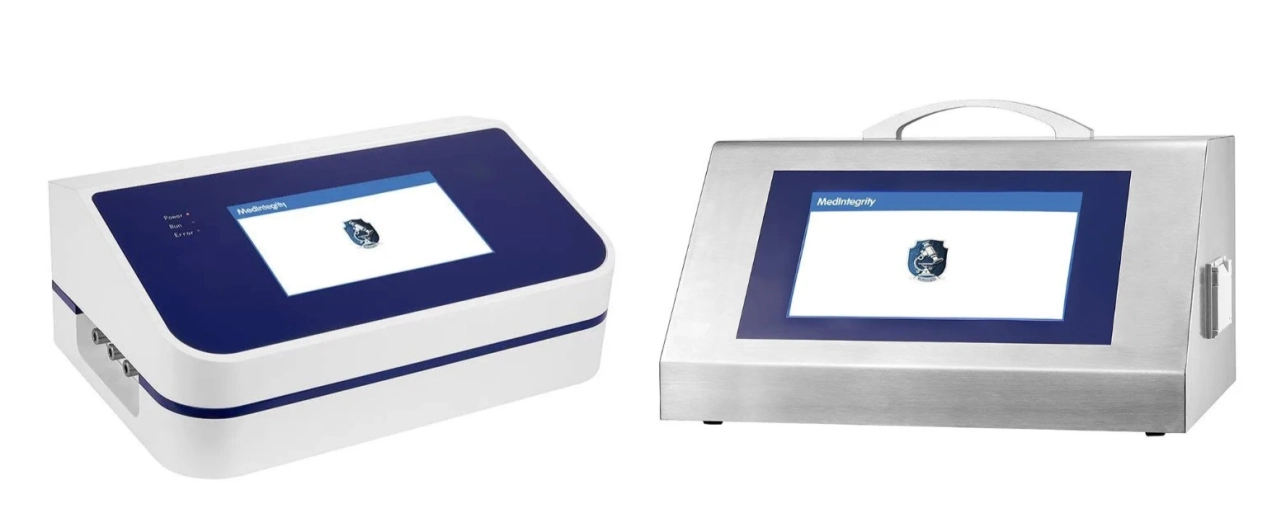
Flagship Products: The BGT-120 and BGT-200 Bag Integrity Testers
MedIntegrity’s product line features advanced instruments like the BGT-120 e BGT-200 Bag Integrity Testers. This series is based on the mature and reliable pressure drop test principle, designed according to the methodology of ASTM F2095-01. With years of field experience, the BGT series is engineered to meet the stringent demands of modern pharmaceutical quality control.
Advanced Features and Compliance
- Full Regulatory Compliance: The BGT series ensures full compliance with GAMPs and FDA 21 CFR Part 11. It features scientific user management, password login, user classification, and electronic signatures to guarantee data security and traceability.
- Complete Data Integrity: A comprehensive, built-in audit trail function records all operations, changes, and signatures, ensuring that all data is traceable and secure, meeting the highest regulatory standards.
- Intuitive Operation: The systems feature a large 10-inch color touch screen with a friendly human-machine interface. Running on an optimized and stable Linux operating system, they deliver simple, fast, and reliable operation.
- Robust Data Management & Export: Test records and audit trails can be queried, stored, printed, and exported via USB. Data can be saved as original source files or exported directly as PDF reports.
- Flexible and Robust Design: The instruments can test different types of bags. Their optimized structure achieves an IP54 dustproof and splashproof rating, and they use high-quality quick connectors to prevent incorrect pipe connections.
- Extensive Customization & Connectivity: With a rich set of data interfaces (RS232, USB) and customizable industrial bus options, the BGT series is ready for system integration and intelligent upgrades. The independent R&D team can also provide tailor-made solutions for specific customer requirements.
FAQs
Q1: What is the most accurate method for detecting micro-leaks in pharmaceutical bags?
A: Mass extraction is the most sensitive method for detecting sub-micron leaks. However, for applications requiring robust and cost-effective detection of critical gross leaks in flexible packaging like IV bags, the pressure drop method is a highly effective and validated solution. The MedIntegrity BGT series is specifically designed to provide this reliable and compliant performance.
Q2: What makes the BGT series suitable for pharmaceutical GMP environments?
A: The BGT series is specifically designed for these environments. Its full compliance with FDA 21 CFR Part 11, complete audit trail functionality, multi-level user management with electronic signatures, and robust IP54-rated design ensure it meets the highest standards for data integrity, security, and operational reliability required in a GMP facility.
Q3: Are these CCIT methods compliant with global pharmaceutical regulations?
A: Yes. Deterministic methods like the pressure drop test, vacuum decay, and mass extraction are all recognized and accepted by global regulatory bodies, including the FDA and EMA. The BGT series is designed to help users meet these stringent regulatory expectations with confidence.

 Portuguese
  English
  Russian
  Spanish
  German
  French
  Italian
  Arabic
  Dutch
Dutch  Japanese
  Vietnamese
  Korean
  Malay
Malay  Thai
Thai