

Pharmaceutical Filter Integrity Testing for Capsule Filters in Sterile Filtration Applications
Pharmaceutical Filter Integrity Testing for Capsule Filters in Sterile Filtration Applications
What Pharmaceutical Teams Review Before Approving a Capsule Filter
A Capsule Filter purchase decision usually involves more than the filtration department.
In pharmaceutical manufacturing, filter selection often requires input from process engineers, quality teams, and purchasing managers. Each group looks at different aspects of the same question: can this filtration solution perform reliably and provide the documentation required for GMP production?
During supplier qualification, discussions often move beyond basic specifications. A technical team may review membrane compatibility and flow performance, while the quality department focuses on validation records, test methods, and data traceability.
This becomes especially important for Sterile Filtration applications. A filter may meet its specification before installation, but pharmaceutical manufacturers still need evidence that the installed filter performs correctly during production.
A complete evaluation normally includes:
- Capsule Filter design and compatibility;
- Sterile filtration requirements;
- Filter integrity testing capability;
- Documentation and supplier support.
For manufacturers producing biologics and other pharmaceutical products, the filter and the verification process are closely connected. Selecting the filtration component without considering integrity testing can create challenges during validation and routine batch review.

Selecting a Capsule Filter for Pharmaceutical Applications
Technical Factors That Influence Filter Selection
A Capsule Filter supplier should be evaluated based on how well the product fits the actual manufacturing process.
In pharmaceutical production, there is rarely a single filter specification that works for every application. Product characteristics, process conditions, and validation requirements all influence the final selection.
Common evaluation points include:
| Selection Factor | Why It Matters |
| Membrane material | Determines compatibility with pharmaceutical process fluids |
| Filtration area | Matches required throughput without unnecessary capacity |
| Flow characteristics | Affects processing time and pressure conditions |
| Product recovery | Important when processing high-value products |
| Connection design | Supports integration with existing systems |
| Integrity testing compatibility | Allows verification of filter performance |
| Documentation package | Supports supplier qualification activities |
Membrane selection is often one of the first technical discussions.
PES and PVDF membranes are commonly used in pharmaceutical filtration applications because they offer different characteristics related to chemical compatibility, flow performance, and filtration requirements.
However, membrane selection alone does not complete the qualification process. Pharmaceutical manufacturers also need to confirm how the filter will be tested, documented, and maintained within the production workflow.
Common Mistakes When Choosing a Capsule Filter Supplier
Focusing Only on Filter Cost or Capacity
Price is an important purchasing consideration, but pharmaceutical companies usually evaluate the overall process impact.
A lower-cost Capsule Filter may not provide the best long-term value if it creates additional work during:
- Filter validation;
- Documentation review;
- Integrity testing;
- Quality approval.
Another common issue is selecting excessive filtration capacity.
An oversized filter may increase consumable usage and product hold-up volume without improving the actual manufacturing process.
For smaller production campaigns, development batches, and flexible GMP manufacturing environments, selecting a filter based on process requirements is usually more practical than selecting based only on maximum capacity.
Selecting a Supplier Without Reviewing Testing Compatibility
One area sometimes overlooked during purchasing is compatibility between the filter and the integrity testing system.
Sterile filtration performance must be verified using appropriate testing methods. The selected Capsule Filter should work with the planned verification approach.
Before supplier approval, quality and engineering teams often review:
- Available integrity test methods;
- Required test parameters;
- Equipment compatibility;
- Electronic record capability;
- Technical documentation.
A supplier that understands both filtration requirements and testing workflows can help simplify qualification activities.
Pharmaceutical Filter Integrity Testing in Sterile Filtration Processes
Why Filter Verification Matters During GMP Manufacturing
Sterile Filtration is a critical control step in pharmaceutical manufacturing.
The purpose of integrity testing is not only to generate a test result. It provides documented evidence that the sterilizing filter maintains acceptable performance under defined conditions.
Common pharmaceutical filter integrity testing methods include:
- Bubble Point Test;
- Diffusion Flow Test;
- Pressure Hold Test;
- Water Intrusion Test.
The appropriate method depends on filter characteristics, membrane type, and process requirements.
During GMP production, integrity test records may be reviewed together with batch documentation, deviation investigations, and validation records.
Modern pharmaceutical facilities also require reliable electronic data management. FDA 21 CFR Part 11 requirements for electronic records and electronic signatures have become an important consideration when selecting pharmaceutical testing equipment.
EU GMP Annex 1 has also increased attention on contamination control strategies and sterile manufacturing processes.
For this reason, many manufacturers evaluate the Testador de integridade de filtro together with the filtration component rather than treating them as separate purchases.
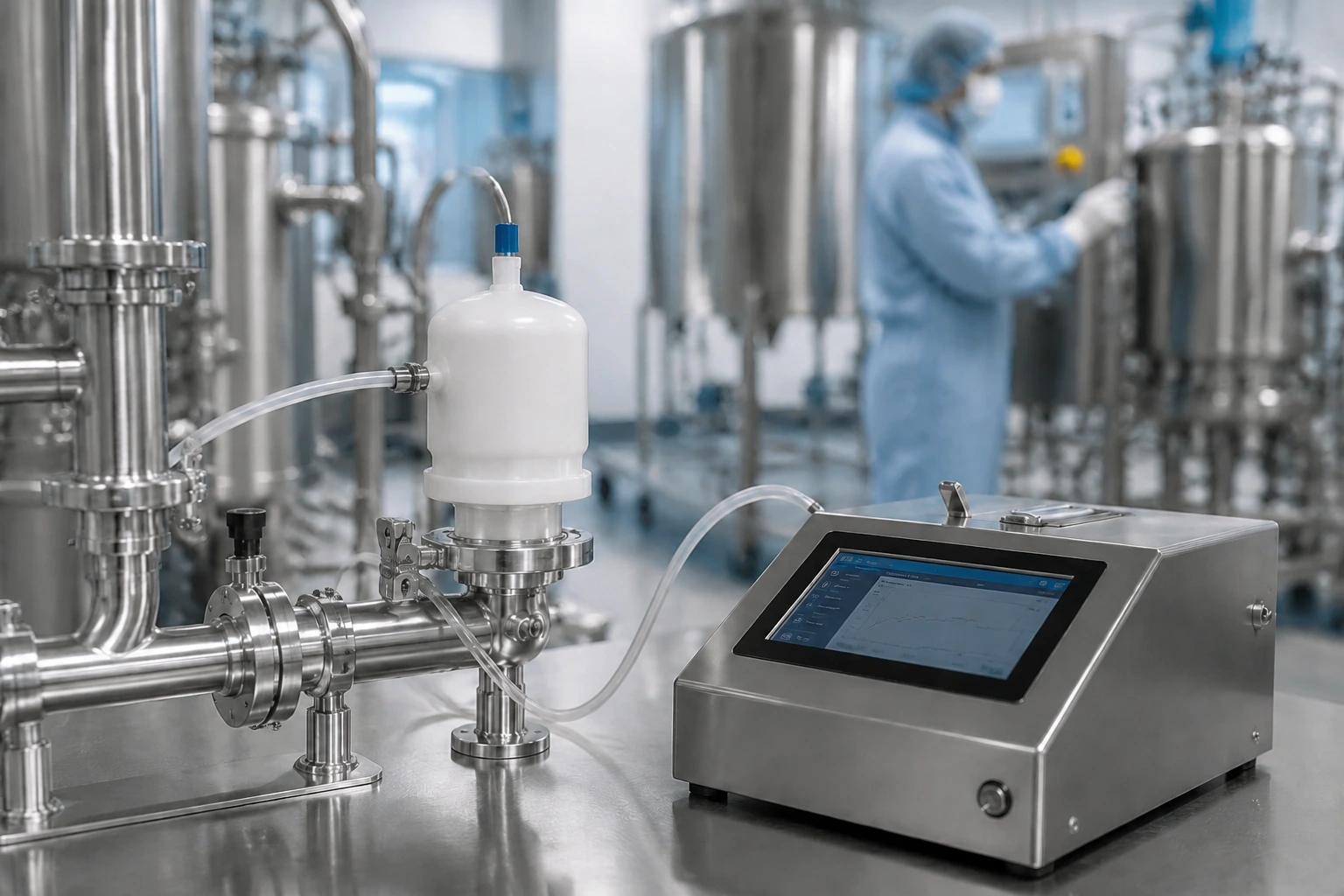
MedIntegrity Filter Integrity Tester Solutions for Capsule Filter Applications
Supporting Sterile Filtration Verification and GMP Documentation
MedIntegrity provides pharmaceutical integrity testing equipment designed for critical manufacturing applications, including filter integrity testing, glove integrity testing, bag integrity testing, and container closure integrity testing.
For manufacturers using Capsule Filters in Sterile Filtration processes, MedIntegrity focuses on verification technology rather than capsule filter production.
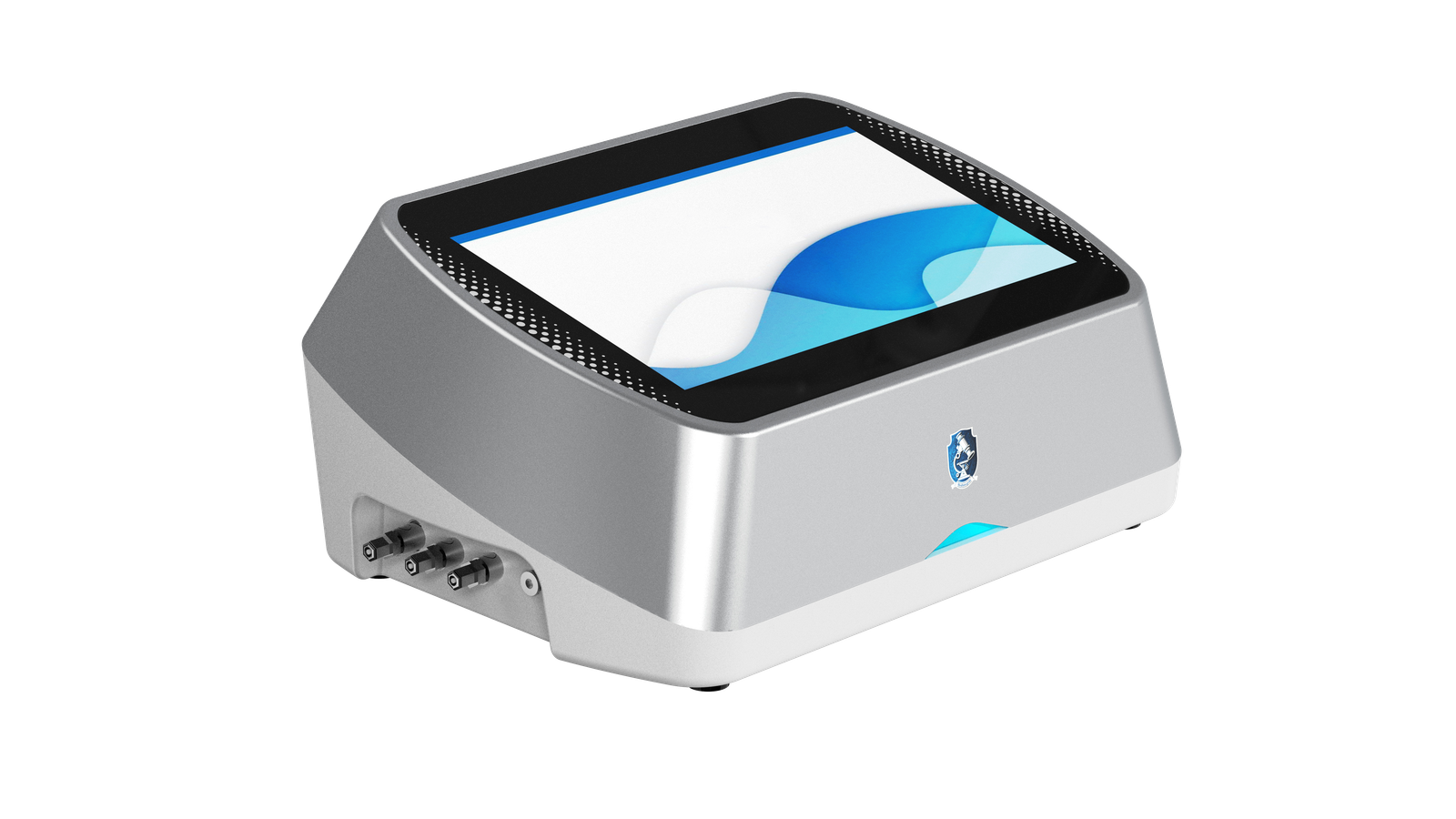
The MedIntegrity Integtest V8.0 system is designed for sterilizing filter integrity testing and supports multiple test methods:
- Bubble Point;
- Diffusion Flow;
- Water Intrusion;
- Pressure Hold.
The system supports integrity testing applications for different filtration formats, including:
- Capsule filters;
- Cartridge filters;
- Flat filters;
- Ultrafiltration membrane systems.
For pharmaceutical manufacturers, selecting a Filter Integrity Tester also involves reviewing data management capabilities.
The Integtest V8.0 includes functions designed for regulated manufacturing environments:
| Função | Manufacturing Value |
| Registros eletrônicos | Supports controlled data management |
| Trilha de auditoria | Provides traceable testing history |
| User management | Supports controlled equipment access |
| FDA 21 CFR Part 11 support | Helps meet electronic record requirements |
| Data export and review | Supports quality documentation workflows |
These functions allow quality teams to maintain clearer records during routine production, validation activities, and regulatory inspections.
What Documents Should Be Reviewed When Qualifying a Filter Integrity Testing Supplier?
Supplier Qualification Is Part of Pharmaceutical Equipment Purchasing
Selecting pharmaceutical filtration equipment usually involves several departments.
Engineering teams evaluate technical performance.
Quality teams review compliance and documentation.
Purchasing teams consider supply capability and long-term cooperation.
Before approving a Filter Integrity Tester supplier, manufacturers may review:
- Equipment specifications;
- User manuals;
- Validation support documents;
- Software functions;
- Data management capabilities;
- Technical service information.
Global suppliers such as Sartorius, Pall, and Millipore have strong positions in pharmaceutical filtration because of their broad product portfolios and established market presence.
However, some manufacturers also evaluate specialized suppliers based on technical focus, communication efficiency, and application support.
The best supplier choice depends on the company’s manufacturing model and qualification requirements.
Selecting a Long-Term Partner for Sterile Filtration Verification
Filter Performance and Data Traceability Work Together
A reliable Sterile Filtration process requires more than selecting a filter.
The filtration component, integrity testing method, equipment capability, and documentation system all contribute to manufacturing control.
For pharmaceutical manufacturers, early consideration of integrity testing requirements can reduce challenges during validation, routine production, and regulatory review.
MedIntegridade supports pharmaceutical companies with Filter Integrity Tester solutions designed for sterilizing filtration applications.
Manufacturers evaluating Capsule Filter verification workflows, pharmaceutical filter integrity testing equipment, or GMP documentation requirements can contato MedIntegrity to discuss suitable configurations.
FAQ
Q1: How should pharmaceutical companies evaluate a Capsule Filter supplier?
A: Companies should review membrane compatibility, technical documentation, validation support, integrity testing compatibility, and supplier experience with pharmaceutical manufacturing requirements.
Q2: Can a Filter Integrity Tester be used with capsule filters from different manufacturers?
A: Compatibility depends on the filter design and testing requirements. Manufacturers should confirm supported test methods, connections, and operating parameters before equipment selection.
Q3: What integrity tests are commonly used for Sterile Filtration validation?
A: Common methods include Bubble Point, Diffusion Flow, Pressure Hold, and Water Intrusion testing. The selected method depends on filter characteristics and process conditions.
Q4: What documents are usually required during pharmaceutical supplier qualification?
A: Typical documents include technical specifications, operating information, validation-related materials, quality documentation, and data management details.
Q5: Why is electronic data management important for pharmaceutical Filter Integrity Testing?
A: Electronic records, audit trails, and controlled user access help manufacturers maintain traceable test histories and support GMP quality review.
 Portuguese
  English
  Russian
  Spanish
  German
  French
  Italian
  Arabic
  Dutch
Dutch  Japanese
  Vietnamese
  Korean
  Malay
Malay  Thai
Thai