

GMP Filter Integrity Tester TCO: European vs Chinese-Made Systems
GMP Filter Integrity Tester TCO: European vs Chinese-Made Systems
For pharmaceutical and biopharmaceutical manufacturing sites, a GMP filter integrity tester is not purchased as a standalone instrument. It becomes part of the sterile filtration control strategy, batch record system, QA review process, and long-term equipment management plan.
That is why total cost of ownership, or TCO, gives a clearer view than purchase price alone. European and Chinese-made systems may differ in brand history, service model, spare parts planning, configuration flexibility, validation support, and operating cost. A useful comparison should look at how each system performs across the full lifecycle, not only at the first quotation.
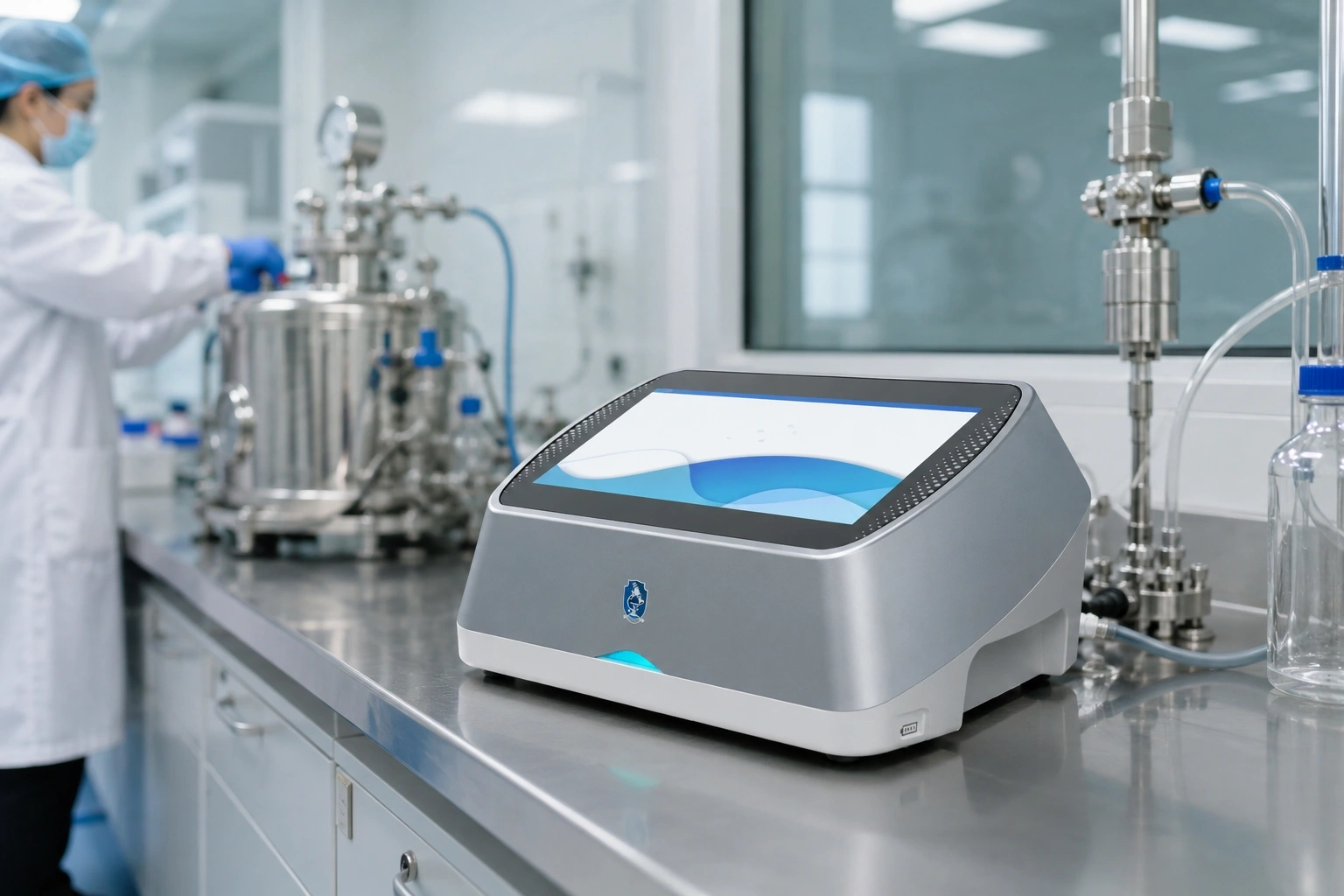
MedIntegrity V10 is positioned for pharmaceutical manufacturers that need a GMP-focused filter integrity tester with reliable test performance, traceable records, production-scale usability, and practical long-term service value.
Why TCO Is a Better Procurement Metric
A filter integrity tester supports sterilizing-grade filtration, where test results may be reviewed as part of batch release documentation. In this context, the lowest equipment price is not always the most economical choice.
A stronger TCO review usually includes:
- Equipment purchase and configuration
- Installation, commissioning, and user training
- Qualification support and documentation workload
- Calibration and periodic verification
- Preventive maintenance and spare parts planning
- Data export, record review, and audit readiness
- Service response and long-term technical support
- Interface requirements for production or automation planning
For procurement teams, TCO turns the discussion from “Which system costs less today?” into “Which system will be easier to operate, maintain, document, and support over several years?”
Regulatory and Documentation Factors
Sterilizing-grade filtration is a critical control point in pharmaceutical manufacturing. Common non-destructive integrity test methods include Bubble Point, Diffusion Flow, Pressure Hold, and Water Intrusion.
In GMP environments, filter integrity testing may be reviewed under sterile filtration control expectations such as EU GMP Annex 1 and electronic record requirements such as 21 CFR Part 11. Different facilities may apply different validation strategies, but the basic expectation is consistent: test methods should be controlled, results should be traceable, and records should be reviewable.
This makes data integrity a real purchase criterion. A GMP filter integrity tester should support user access control, password protection, audit trail, electronic signature, test record query, and secure data export. These functions can reduce manual review pressure and help quality teams keep testing records organized.
European vs Chinese-Made Systems: What Should Be Compared
European filter integrity tester brands such as Sartorius, Merck Millipore, Pall, and Cytiva are widely recognized in pharmaceutical manufacturing. Many multinational sites are familiar with platforms such as Sartocheck, Integritest, and Palltronic systems. Their market history and validation familiarity can be valuable, especially for companies with standardized global equipment lists.
Chinese-made systems should be evaluated with the same technical and quality criteria. The key question is not where the system is made, but whether it fits the site’s filtration process, documentation expectations, service route, and lifecycle budget.
| Evaluation Area | Why It Matters in TCO | What Buyers Should Check |
| Test methods | Determines application coverage | Bubble Point, Diffusion Flow, Pressure Hold, Water Intrusion |
| GMP records | Affects QA review efficiency | Audit trail, electronic signature, user roles, export formats |
| Qualification support | Reduces validation workload | Documentation, test repeatability, controlled settings |
| Calibration route | Affects recurring cost | Calibration planning, verification records, support availability |
| Spare parts planning | Reduces supply risk | Recommended parts, lead time, replacement process |
| Operator workflow | Affects training and consistency | Touchscreen, stored programs, prompts, self-test |
| Integration options | Supports future system planning | USB, RS232, customized industrial buses, analog control ports |
A practical buyer should compare equipment origin only as one factor. The more important decision is whether the supplier can support the instrument through routine GMP use.
MedIntegrity V10: TCO-Focused Features for GMP Testing
Broad Test Method Coverage
MedIntegrity V10 supports major filter integrity testing methods used in pharmaceutical production, including Bubble Point, Diffusion Flow, Pressure Hold, Water Intrusion, and ultrafiltration-related testing.
This method coverage helps facilities work with different filter types, including hydrophilic liquid filters, hydrophobic vent filters, cartridges, filter bags, flat membranes, and other filter configurations. For sites using multiple filter formats, one platform with broader method coverage can reduce training complexity and simplify equipment management.
Controlled Programs and Operator Consistency
MedIntegrity V10 supports stored test programs, helping operators repeat validated parameters without rebuilding each test setup from the beginning. For production lines running multiple cartridge filters or repeated batch operations, this can reduce manual variation and make routine testing more consistent.
The 15.6-inch true-color touchscreen also supports clearer parameter review and easier curve checking. In daily production, a clear interface is not just a comfort feature. It can help operators select programs correctly, confirm test status faster, and reduce avoidable input errors.
Data Integrity and Record Traceability
MedIntegrity V10 supports password login, user classification, multi-level access control, electronic signature, audit trail, test record query, and data export. These functions are closely tied to GMP documentation and QA review.
Test data can be exported through USB, including original test data, source data, configuration data, and report-style records. For quality teams, exportable and traceable records can make review more direct and reduce dependence on scattered manual files.
From a TCO perspective, better record control means less time spent searching, checking, correcting, or explaining test documentation.
Cartridge Capacity and Interface Flexibility
MedIntegrity V10 can test up to 12-core 20-inch filter cartridges, making it suitable for larger sterile filtration processes. For pharmaceutical sites working with higher-capacity filter assemblies, this capacity can support production-scale testing requirements.
The system supports RS232 and USB interfaces. Customized industrial buses and analog control ports can also be configured according to production requirements. For sites planning future equipment integration, these interface options provide more room for long-term process planning.
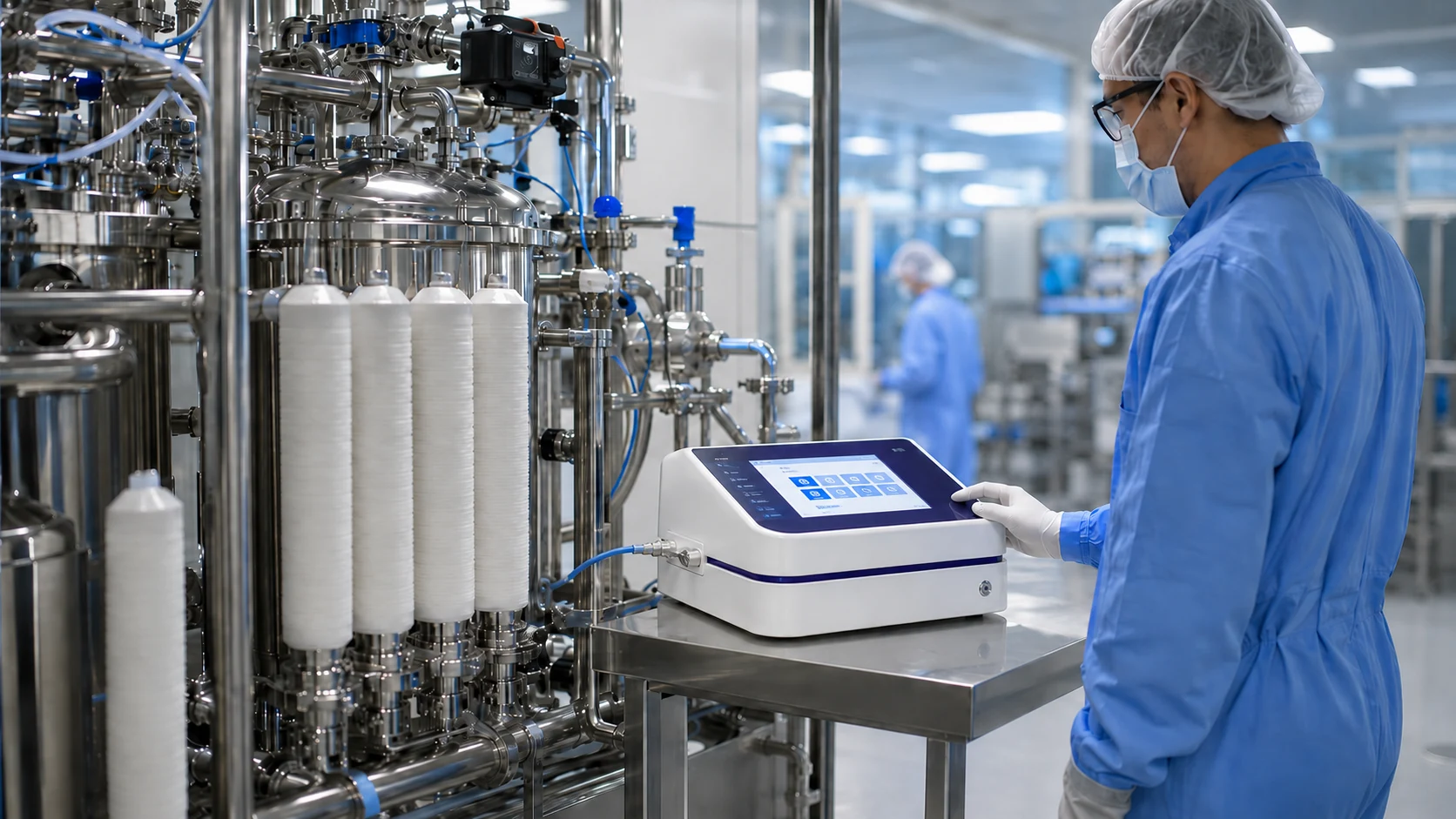
Service, Calibration, and Lifecycle Support
TCO is strongly affected by service planning. A filter integrity tester may remain in use for years, so buyers should review how the supplier supports training, maintenance, calibration knowledge, repair handling, and spare parts planning.
ความเป็นปอด provides technical training covering instrument performance, structure, operation, components, maintenance, testing, and calibration knowledge. The company also provides after-sales support, return visits, feedback collection, and warranty-period repair or replacement support for qualified product quality issues.
For buyers comparing European and Chinese-made systems, service should be assessed in practical terms:
- Can operators receive clear training?
- Is calibration planning easy to arrange?
- Are spare parts and accessories clearly defined?
- Can technical questions be handled without long communication loops?
- Can the supplier support the actual filtration process, not only the instrument sale?
These points shape the long-term ownership cost more than a basic specification sheet.
How MedIntegrity V10 Fits Global Procurement Decisions
For global pharmaceutical buyers, established European and U.S. brands may remain familiar reference points. MedIntegrity V10 should be assessed through the same procurement lens: application fit, testing reliability, GMP documentation, service support, and lifecycle value.
Its key value lies in the combination of multi-method testing, large touchscreen operation, electronic signature, audit trail, access control, stored programs, exportable records, cartridge testing capacity, and interface customization. These features help position V10 as a practical GMP filter integrity tester for manufacturers comparing operating value across different equipment origins.
This article does not frame the decision as Europe versus China in a simple price comparison. The stronger procurement approach is to compare how each system supports sterile filtration testing, QA review, service planning, and future production needs.
ข้อสรุป
A GMP filter integrity tester should be selected by lifecycle value, not purchase price alone. European systems remain established choices in many pharmaceutical companies, while Chinese-made systems should be evaluated through the same technical, quality, and service criteria.
MedIntegrity V10 is designed for pharmaceutical manufacturers that need reliable filter integrity testing, traceable GMP records, production-scale usability, and practical lifecycle support. For teams comparing filter integrity tester TCO, MedIntegrity can support application review, V10 configuration discussion, calibration planning, and service evaluation based on actual sterile filtration workflows.
คำถามที่พบบ่อย
Q1: What is a GMP filter integrity tester used for?
A: It checks whether sterilizing-grade filters remain intact before or after filtration in pharmaceutical manufacturing workflows.
Q2: Why compare filter integrity tester TCO instead of only price?
A: TCO includes calibration, training, data review, spare parts, service response, and long-term equipment support costs.
Q3: Which test methods should a filter integrity tester support?
A: Common GMP methods include Bubble Point, Diffusion Flow, Pressure Hold, and Water Intrusion testing.
Q4: What should buyers compare between European and Chinese-made systems?
A: Buyers should compare test methods, GMP records, calibration route, service model, spare parts, and application fit.
Q5: What makes MedIntegrity V10 suitable for GMP sterile filtration?
A: V10 supports multi-method testing, traceable records, stored programs, cartridge capacity, and service support for GMP workflows.
 Thai
Thai  English
  Russian
  Spanish
  Portuguese
  German
  French
  Italian
  Arabic
  Dutch
Dutch  Japanese
  Vietnamese
  Korean
  Malay
Malay