

Container Closure Integrity Testing: FDA 2026 & Vacuum Decay
Container Closure Integrity Testing: FDA 2026 & Vacuum Decay
The FDA’s August 2026 draft guidance has brought container closure system quality back into focus for pharmaceutical packaging, QA, validation, and procurement teams. The document remains Draft Level 1 guidance, is not for implementation, and contains non-binding recommendations. For companies reviewing container closure integrity testing, the practical question is whether existing CCIT evidence still represents the package, manufacturing process, and intended use—not simply whether the test instrument has been qualified.
MedIntegrity supplies pharmaceutical testing equipment for package and process integrity applications through its pharmaceutical testing product range, including equipment for pharmaceutical package leak testing. In a CCIT project, instrument capability matters most when the package, chamber, test parameters, controls, and data requirements work together. That makes CCIT validation, change control, and package-specific detection capability especially relevant in 2026.

Key Implications of the 2026 FDA Draft Guidance for Container Closure Systems
The new draft provides guiding principles for evaluating the quality of container closure systems used for human drugs and biological products. It does not make vacuum decay or another specific CCIT technology mandatory. For B2B buyers, that distinction matters because a leak tester is only one part of the test strategy. Package configuration, closure performance, method conditions, controls, and acceptance criteria still need to form a technically sound whole.
Regulatory Status and Practical Impact in 2026
Because the document is still draft guidance, it is not a basis for treating proposed recommendations as final requirements. A more practical response is to review whether existing package-integrity evidence remains representative of the commercial configuration.
That review becomes more relevant when container components, sealing conditions, suppliers, fill configuration, or test tooling have changed since the original method was developed. The focus stays on the current package and the evidence supporting it.
Reviewing CCS Evidence as a Complete System
A vial and stopper can each meet their individual specifications without automatically demonstrating the integrity of the assembled package. Stopper position, crimp condition, package geometry, and manufacturing variation all affect the final closure interface.
For validation teams, the useful question is not only whether individual components remain within specification. It is whether the assembled container closure system continues to have appropriate integrity evidence under its actual production, storage, and test conditions.
Where CCIT Fits into a Lifecycle Package Integrity Strategy
Container closure integrity testing is more useful as a lifecycle control than as a one-time qualification exercise. USP <1207> addresses integrity assurance for nonporous packages intended for sterile pharmaceutical products and includes leak-test method selection, validation, and use. USP <1207.1> places package integrity verification across development, manufacturing, and commercial shelf-life stability.
That lifecycle view also affects purchasing. Equipment selected around one current format may later need a different chamber, changed package condition, or revised test method.
Package Integrity Is a System-Level Attribute
CCIT evaluates the assembled package. Changes in closure compression, vial dimensions, headspace, or sealing conditions can alter package behavior even when individual components have not changed.
During method development, intact units provide a normal-response population, while controlled-defect samples help characterize the response to leakage. Package-specific considerations can vary substantially; MedIntegrity’s lyophilized vial CCI testing guide covers that application separately without turning a general CCIT method into a one-size-fits-all approach.
What a Defensible CCIT Validation Package Needs to Demonstrate
A credible CCIT validation package connects equipment performance with package-specific method performance. These are related, but they answer different questions. This becomes very practical when procurement compares two or three systems: a published sensitivity value can help create a shortlist, but it cannot by itself demonstrate repeatable discrimination between intact and defective packages.
Instrument Qualification Is Not CCIT Method Validation
Instrument qualification confirms that the tester performs within its defined operating specifications. CCIT method validation asks whether the selected method is suitable for the intended product-package system.
Package geometry, fill volume, headspace, chamber volume, test pressure, stabilization behavior, and acceptance criteria can all affect the response. A qualified instrument may still need package-specific method development before it moves into routine use.
From Instrument Sensitivity to Proven Package-Level Detection Capability
A small micron value is easy to compare on quotations. It is not the whole method.
Actual detection capability depends on the complete setup: chamber dead volume, pressure behavior, package rigidity, fill condition, test duration, and the defect standard all matter. A more useful procurement question is:
Can this configuration repeatedly distinguish intact packages from relevant, defined defects under controlled conditions?
This is also why MedIntegrity treats package information as part of the equipment discussion. Container dimensions, closure configuration, fill condition, available control samples, and expected test volume provide a more useful starting point than sensitivity specifications alone.
Positive and Negative Controls in CCIT Validation
Controls provide reference populations for method development and validation. Negative controls establish intact-package behavior, while positive controls introduce a characterized defect challenge. Their value comes from helping define how clearly the method separates normal packages from known defects—not simply from having a “leak sample” available.
Positive Controls, Fill Condition, and Headspace
Positive-control designs can include laser-drilled defects, microcapillaries, or other characterized defects. Different approaches provide different information, so the appropriate choice depends on the package and validation objective.
Package condition matters as well. Fill volume changes headspace, and liquid near a leak path can influence test behavior. Once intact-package response and defect response are established, the next question is how long that evidence remains representative when the package or manufacturing process changes.
CCIT Change Control and Re-Evaluation After Packaging Changes
Validation does not freeze a packaging system in time. Containers, closures, suppliers, sealing processes, test chambers, and method settings may change later. A packaging change starts with an impact assessment, not automatic full revalidation. The objective is to determine whether the existing CCIT method validation remains applicable and what additional work, if any, is justified.
Packaging and Method Changes Requiring Impact Assessment
| Change | Potential CCIT Impact |
| Container or closure change | Sealing interface may change |
| Fill volume or headspace change | Test response may shift |
| Test chamber change | Dead volume and response may change |
| Sealing-process change | Closure performance may change |
| Test-parameter change | Validated test conditions change |
Supplier or material changes deserve similar review when they alter method-relevant characteristics. If a change affects CCIT, the existing test method can then be checked for stable and discriminatory performance before routine use continues.
Vacuum Decay Leak Testing: Validation Factors Beyond Instrument Sensitivity
Vacuum decay leak testing is a deterministic approach used for package leak detection. ASTM F2338-24 covers nondestructive package leak detection by the vacuum decay method. Acceptance criteria are established by comparing baseline measurements from non-leaking controls with responses from leaking packages and characterized simulated leaks. USP <1207.2> also addresses leak-test technologies as part of pharmaceutical package integrity method development and validation.
For a pharmaceutical application, however, using a recognized method name does not remove the need for package-specific test conditions.
Chamber Fit, Headspace, and Stable Test Response
A test chamber with unnecessary dead volume can reduce the measurable response. Fill condition can change that response as well, which is why an empty package cannot automatically be treated as equivalent to its filled production configuration.
The useful target is repeatable separation between intact packages and defined defects under controlled test conditions—not the smallest defect detected once.
Once these variables are clear, equipment comparison also gets easier. Procurement can move past generic sensitivity claims and ask how the proposed chamber, controls, and method settings will fit the actual package.
What to Ask a Pharmaceutical Packaging Leak Tester Supplier
A useful RFQ starts with the application rather than a long feature list. Package dimensions, closure configuration, fill condition, current test method, control samples, throughput, and data requirements give a supplier a much better basis for proposing equipment.
For teams still developing their URS, MedIntegrity’s guide to selecting a pharmaceutical packaging leak tester covers the wider purchasing process.
Application Questions to Resolve Before Quotation
- Can the chamber be matched to the actual package?
- How will intact and controlled-defect samples be evaluated?
- Can method parameters be developed for the package?
- How are test programs and records controlled?
- What verification and qualification support is available?
- What changes if another package format is introduced later?
These answers are usually more useful than comparing one headline sensitivity number across quotations.
How MedIntegrity MFT-1000 Fits a Package-Specific CCIT Project
O MedIntegrity MFT-1000 Packaging Leak Tester apoia vacuum attenuation and pressure attenuation methods for pharmaceutical packaging integrity testing. Its test chamber can be customized around the package, while MedIntegrity also supports automatic leak-flow calibration, standard leak-rate verification, positive-control package preparation, and sample-specific method-parameter development and verification.
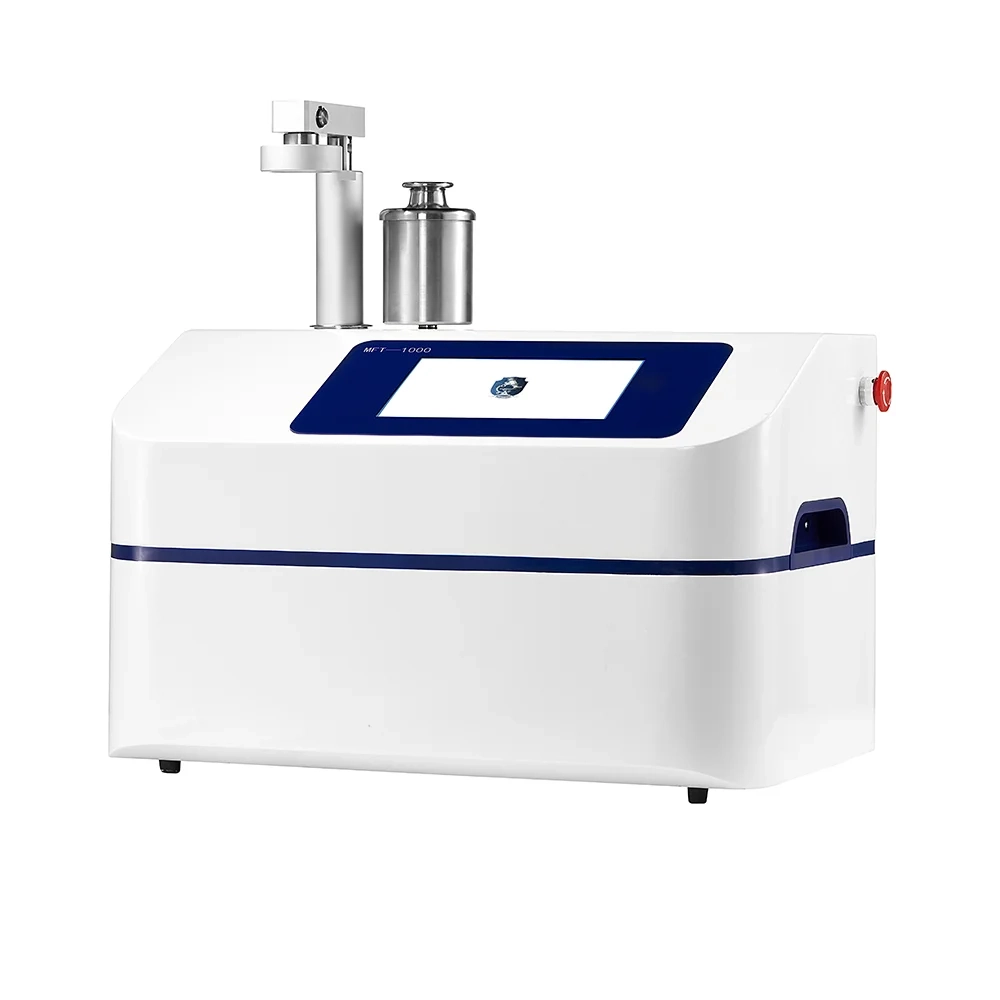
Those capabilities become useful when a project moves from initial package samples to a controlled routine method. Chamber fit affects the test setup; control samples help characterize response; method parameters need to match the intended package.
For QA use, the MFT-1000 also includes audit-trail functionality, controlled user authority, historical record storage, USB data export, and communication interfaces. These features matter when CCIT records need to move from engineering trials into routine review and traceable production records.
The final method still depends on the actual package, chamber, fill condition, controls, and validated parameters. That is a stronger basis for equipment selection than choosing a tester from one specification alone.
Information to Prepare for a CCIT Equipment Inquiry
A finished URS is not necessary for the first technical discussion. Package type and dimensions, closure configuration, fill condition, current CCIT method if available, control samples, expected throughput, data requirements, and project schedule are usually enough to begin an application review.
Conclusão
The FDA’s 2026 Container Closure Systems draft guidance gives pharmaceutical teams a timely reason to review how package-integrity evidence is developed and maintained. It does not mandate vacuum decay or another specific CCIT technology, and it remains draft, non-binding guidance.
For container closure integrity testing, stronger evidence comes from the actual package, appropriate controls, controlled method parameters, and demonstrated package-level detection capability. The same logic continues after initial validation through change control and method re-evaluation.
For a new CCIT project, contact MedIntegrity for an application review with the package configuration, fill condition, current method, expected throughput, data requirements, destination market, and project timeline.
FAQ
Q1: What does the FDA 2026 Container Closure Systems draft guidance cover?
A: It provides draft, non-binding principles for evaluating the quality of container closure systems used for human drugs and biological products. It does not prescribe one CCIT method.
Q2: Does FDA require vacuum decay for container closure integrity testing?
A: No. Vacuum decay is one deterministic leak-testing approach. Method selection depends on the product-package system, intended use, and validated test strategy.
Q3: Is instrument qualification the same as CCIT method validation?
A: No. Instrument qualification confirms equipment performance. CCIT method validation demonstrates that the selected test method is suitable for the specific package and intended application.
Q4: When does a packaging change require CCIT revalidation?
A: A packaging change first needs technical impact assessment. Changes to the container, closure, fill condition, sealing process, test chamber, or test parameters may lead to verification or broader revalidation when they affect the validated method.
Q5: How does USP <1207> relate to CCIT validation?
A: USP <1207> provides a lifecycle framework for package integrity assurance for nonporous packages intended for sterile pharmaceutical products. It covers leak-test method selection, validation, and use across the product lifecycle.
Postagens relacionadas
-
Container Closure Integrity Testing: FDA 2026 & Vacuum Decay
September 17,2026
 Portuguese
  English
  Russian
  Spanish
  German
  French
  Italian
  Arabic
  Dutch
Dutch  Japanese
  Vietnamese
  Korean
  Malay
Malay  Thai
Thai